WITCHY WAYS TO CELEBRATE JUNE

Feel The Magick!!!WITCHY WAYS TO CELEBRATE JUNE

Decorate your home and altar with fragrant blooms, and light candles to represent the sun.

Connect with the fairies by leaving an offering of milk, honey, or sweet bread under a bramble bush. Sit in the quiet of sunrise and sunset to see the Fae folk.

Spell for purification by creating a Midsummer fire and making a protective talisman of summer herbs. Cast illness aside by throwing a pouch of herbs into the cleansing flames.

Come together with others, either in person or online, to celebrate the longest day. Make a connection.

Get out and about, and find both an oak and a holly tree. Bow in respect to both at this time of their yearly battle.

Hedgewitch Book of Days: Spells, Rituals, and Recipes for the Magical
Mandy Mitchell

Let’s Talk Witch – Reaping Summer’s Bounty

WitchREAPING SUMMER’S BOUNTY

With all this time spent outside and with the garden at its height, all the beautiful blooms around you are practically screaming to be picked. It’s hard not to gather them all and plonk them in a vase. They can brighten up any room in your home and make a gorgeous gift for a friend when you pop round for coffee. But there is so much more you can do with your flowers than just display them. Here are some ideas that you can use at home with your beautiful blooms:

Eat them.
Now, I do not suggest that you go around munching on any old flower. But some are edible and delicious. Get a good book on edible blooms and have a go at introducing one or two of them into your cooking. Some of my favorites are rose petals, herbs like chives and thyme, violets, pansies, marigolds, borage, chamomile, and (my all time favorite) lavender.

Drink them.
Add them to drinks or ice cubes before freezing, or try them in cakes and salads.

Dry them.
Hang small bunches of flowers in a warm, dark place, making sure the stems are secured so they don’t fall as they shrink and dry. You can use these dried flowers to make all sorts of things, from a simple arrangement to a pretty decoration or picture. This is a wonderful way to preserve a special bouquet.

Bathe in them.
Add a couple of handsful to your bath to bathe in the essences of the plant. You will feel like a princess or prince, and the water will be infused with the properties of the flower you choose. If you don’t fancy scooping out loose petals, tie them loosely in a muslin square and drop this into your bath instead.

Press them.
Place small blooms carefully in a flower press or under heavy books between tissue paper, and leave them to press for a couple of weeks. Use them to decorate lampshades or picture frames, or place them in your Book of Shadows.

Strew them.
Mix together a few beautiful petals and strew them around your home. They will impart a delicate fragrance and magically charge the air with their properties. I like to use rose petals and lavender in the bedroom for romance and peace.

Repel pests.
Some flowers repel flies, mosquitoes, and rodents, so they are well worth using in the home. Hang bunches of lavender, basil, marigolds, or mint over your door to help prevent flies, and sprinkle dried lavender flowers at access points for mice to repel them.

Bask in them.
Simmer a couple of handsful of rose petals in pure water, strain, and use as a tonic for your skin after cleansing to ease redness and skin irritations. Always do a patch test first.

Speak their language.
Most flowers have a language attached to them— red roses are for love, lavender for peace, dandelions for happiness, etc. Learn about a new flower every time one comes into your life. Then start to send messages to your loved ones with them.

Spell with them.
Include flowers in your spells or sachets to add a soft energy to your magic and bring their properties to aid your goal. Place them on your altar as an offering.

Cure with them.
So many flowers have medicinal uses, from St. John’s wort for depression to chamomile for stress. Research how flowers can help you with some simple remedies at home, or use flower essences already infused with the flower’s energy.

Hedgewitch Book of Days: Spells, Rituals, and Recipes for the Magical
Mandy Mitchell

Celebrating Other Spirituality 365 Days a Year – Vidar’s Day

Conjuring

June 14th


Vidar’s Day

In modern Asatru, this day is sacred to Vidar, son of Odin who survives the destruction of Ragnarok. Patron of leatherworkers, Vidar has a stout boot that he puts in the mouth of the demonic Fenris-wolf to kill it. On this day, it is customary for Nordic leatherworkers to put aside all their scraps and then bury them in a pit for Vidar to ward off evil and bad luck.

Sunday and the Perfect Corresponding Spell

autumn witchcraftSunday and the Perfect Corresponding Spell

Finally, it’s Sunday, the official day of rest. Not only do Christians acknowledge this day, but I’m sure many Pagans appreciate this day, as well. Everyone needs rest and lot of people need a good day to worship their creator (whomever or whatever that may be), however they deem fit to do so. With the Sun being the central theme of many ancient rituals, Sunday just seems to fit, in name and theory. Not only is it a good day to worship, it seems good to do more relaxed spells, such as, sleep, dream and rebirth.

Sunday Sunrise Spell for Illumination

Here is a spell that invokes the aid of the triple goddess Brigid. This spell is meant to warm you up from the inside out. This will cause you to have a magickal sparkle and for your lovely personality to shine right through. If you don’t feel particularly lovely at the moment, then maybe it’s time for a change. This should help you to improve your outlook and cheer you up. Brigid is probably one of the more popular goddesses that modern Witches work with. I think it is because she is so welcoming, strong, and feminine, all at once.

For this spell, try working outside at sunrise. You can also beef this up by adding some natural correspondences, such as stones or flowers, to the spoken verse to help tie the energy together. You could include tiger’s-eye, amber, and carnelian. Set these stones around your candles. Slip a few stems of a sun-associated flower into a vase. Try draping the workspace with a gold-colored cloth-celestial fabrics that feature bright yellow suns would be a smart choice. Or just set up in view of a sunny window and let the sunshine illuminate the workspace naturally.

Repeat the spell below three times:

Sunday starts off the week with its bright golden glow
This day brings fame, wealth and causes friendships to grow
Light a gold and yellow candle to ensure success
I call on the Goddess Brigid, my spell she will bless
Her light glows inside me from within my soul will shine
Leadership, health, and growth will all appear in good time.

Close the spell by saying:

With all the power of three times three
As I will it, then so shall it be.

You can work this spell whenever you feel the need for a little extra personal power. As before, you may keep the stones in your pocket for a few days, or tuck the flowers from the spell into your hair or pin them onto your jacket like a tiny corsage. This will ensure that you carry a bit of Brigid’s magick throughout your day.


Book of Witchery: Spells, Charms & Correspondences for Every Day of the Week
Ellen Dugan

Daily Magickal Application for Sunday, June 14th

WitchcraftDaily Magickal Application for Sunday, June 14th

The Latin term for Sunday, our first day of the week, is Dies Solis (“sun’s day”). In ancient Greek, it was called Hemera Heliou. In the Old English language, it was known as Sunnandaeg; in Middle English, Sonenday. All of these titles mean the same thing: the day of the sun.

What do you think of when you feel the sun shine down on you? What sorts of enchantments and energies do you think would be complementary to a day named after our closest star? Sunday brings those bright solar energies into your life and has the magickal correspondences of success, promotion, leadership, pride, light, generosity, warmth, fitness, and personal growth. Astrologically, the sun symbolizes the conscious self and rules the zodiac sign of Leo.

The charms and spells that would complement this magickal day of the sun are ones for personal achievements of any kind-such as if you are seeking fame and wealth, working for that much-deserved promotion at work, or being acknowledged for a job well done. Health issues, increasing personal power, or simply sticking to your diet and being proud of what you have accomplished all fall under the sun’s golden influence.

Book of Witchery: Spells, Charms & Correspondences for Every Day of the Week
Ellen Dugan

Sunday Is Ruled By The Sun

That Old Black Magic Got Me In  a SpellSunday Is Ruled By The Sun

Sunday corresponds to the sun, our closest star. This day is full of wonder and all sorts of magical potential for success, wealth, and fame. Sundays are for personal achievements of any kind such as working towards a promotion at your job, seeking fame and wealth, or being acknowledged for a job well done. All of these goals fall under the golden influence of the sun. Some suggestions for Sunday enchantments would include:

Sitting outside at sunrise and calling on the goddess Brigid for illumination and inspiration

Wearing gold jewelry or clothing that is gold or sunshine yellow to pull some color magic into your life

Arranging a few sunflowers in a vase and empowering these “flowers of the sun” for fame and ambition

Gathering up the common marigold flower and scattering it’s petals about to encourage prosperity

Baking up a batch of cinnamon rolls for the family and enchanting them for health and success

Snacking on a solar fruit, the orange, and enjoying the magical boost it brings to your life

The Witches Correspondences for Sunday, June 14th

witchcraft
The Witches Correspondences for Sunday, June 14th

Magickal Intentions: Growth, Advancements, Enlightenment, Rational Thought, Exorcism, Healing, Prosperity, Hope, Exorcism, Money

Incense: Lemon, Frankincense

Planet: Sun

Sign: Leo

Angel: Michael

Colors: Gold, Yellow, Orange and White

Herbs/Plants: Marigold, Heliotrope, Sunflower, Buttercup, Cedar, Beech, Oak

Stones: Carnelian, Citrine, Tiger’s Eye, Amber, Clear Quartz and Red Agate

Oil: (Sun) Cedar, Frankincense, Neroli, Rosemary

The first day of the week is ruled by the Sun. It is an excellent time to work efforts involving business partnerships, work promotions, business ventures, and professional success. Spells where friendships, mental or physical health, or bringing joy back into life are an issue work well on this day, too.

The Witches Almanac for Sunday, June 14th

Witch Craft
The Witches Almanac for Sunday, June 14th

Sunday (Sun): Healing, spirituality, success, strength and protection.

Flag Day

Waning Moon
The Waning Moon is a time for study, meditation and little magickal work (except magick designed to banish harmful energies).

Moon Phase: Fourth Quarter

Moon Sign: Taurus
Taurus: Things begun now last the longest, tend to increase in value, and become hard to alter. Brings out appreciation for beauty and sensory experience.

Moon enters Gemini 1:15 pm
Gemini: Things begun now are easily changed by outside influence. Time for shortcuts, communication, games, and fun.

Incense: Hyacinth

Color: Gold

Sunday Must Do’s

Witchcraft

Sunday Must Do’s

Those ambitious, successful spells and charms will be heightened by working on the day of the week that has the planetary influence of the sun. So light those sunny candles, wear some luminous colors, and break out the gold jewelry! Bake up some cinnamon rolls or low-fat cinnamon muffins for an enchanting family breakfast. Take an orange with you to eat at lunch today. Try using a little magickal aromatherapy and burn some cinnamon-scented incense to encourage success and wealth today. Make the talisman to keep your solar magick with you. Sprinkle some dried marigold petals around your house-or across the threshold-to pull triumph and protection toward you and your family.

Get outside and tip up your face to the sun. Take a walk outside, and soak up some sunshine! Acknowledge the power of Sunna or Helios as they blaze across the sky and bring courage and motivation into your life. Sit outside at sunrise on a Sunday morning and bask in its warm, rosy-golden glow Acknowledge Brigid as the inner, creative spark of imagination and inspiration. She can help these gifts burn brightly within your own soul. Use your imagination and create your own brand of witchery and magick. Here comes the sun, and it’s your turn to shine!


—–Book of Witchery: Spells, Charms & Correspondences for Every Day of the Week
Ellen Dugan

Sunday

Witch's Rune
Sunday

Sunday: Is associated with the Sun and the colors of – Yellow, Gold and Orange

Sunday is the best time to deal with such matters as: Achievement, Advancement, Ambition, Authority, Buying, Careers Goals, Children, Crops, Divination, Drama, Fairs, Figures, Fun, Healing Energy, Health, Law, Men’s Mysteries, Personnel Finances, Physical Strength, Promotion, Selling, Speculation, Success, Totem Animals, Volunteer and Civic Services

Practical Magick for the Penny Pinching Witch
Carol Moyer

A Very Happy & Blessed Sunday Morn’ To All Our Dear Friends & Family!

Merry Meet Pictures

We call for knowledge
Vast and thorough
We call for wisdom deep
We call for what we need to know
And learning we can keep
We ask for signs
To point the way
We ask for guidance too
We ask to know what can be known
So send us knowledge true and wise
To make us a better reflection of you,
Our Divine Mother
So we may do your will and spread
Your message throughout the world.

So Mote It Be.

Magick Sachet for the Expectant Witch

MAGICK SACHET FOR THE EXPECTANT WITCH

To be used in the bath or as a dream pillow to soothe away the discomforts of pregnancy.

1/2 tablespoon lemon balm
1 teaspoon lemon verbena
3 tablespoons lavender
2 tablespoons rose petals
7 drops of pure jasmine oil

Mix together all of the ingredients in your cauldron or a wooden bowl. Cut a three-inch square piece of light blue cloth (a natural fiber always works best). Place some of the herbal mixture in the center and tie up the loose ends with some matching yarn. While doing this, visualize the discomforts being soothed away.
When you’re ready, either toss it into a warm bath or hide it in the batting of your favorite pillow (or, if you want it to stay your favorite pillow for very long, put it in your pillowcase)and you’ve got a special dream pillow. Pleasant dreams!

Powerful Fertility Spell

POWERFUL FERTILITY SPELL

Patchouli oil
Sandalwood incense
2 pine cones
3 wheat heads
Green Candle
Green marker and paper

Rub the oil on the candle and anoint yourself around the womb area with a drop of oil. Light the candle and incense and place the pine cones and wheat into a cauldron or container. Visualize your magickal goal and use the marker to draw yourself on the right hand side of the paper as you are now – draw yourself as you want to be on the left side (flat belly – pregnant belly will do just fine) visualize your goal while drawing – when you feel you’ve visualized enough tear the paper in half and fold the left side with your goal drawn on it into a small square and place it in your pocket then light the other paper in the candle flame and place it in the cauldron to burn.
Chant or pray for your goal to be realized as you watch the paper burn. Bury the contents of the cauldron in your yard – preferable a garden – leave an offering of a small crumb of cake on a crystal plate for any good spirits or fairies who might happen by. Stay positive so you don’t attract the attention of any jealous or bad fairies!


Keep the paper with your goal drawn on it with you at all times until your wish is granted then you can place it in a safe place for luck.

Egg Wish Spell for Fertility

EGG WISH SPELL FOR FERTILITY

“On an egg whose shell is brown or pink,
Sign these signs in grass-green ink.
[a simple sun, a male symbol, an encircled equilateral cross, a female sign,
then an upside-down 5-pointed star]
Bury it deep in an earth-filled pot,
Let this stand where the sun is hot;
Sow on its surface seeds of grass,
Water them well while nine weeks pass
Gather the crop, bind it with thread
Let it hang always above your bed

A Midsummer’s Celebration

A Midsummer’s Celebration
by Mike Nichols


The young maid stole through the cottage door,
And blushed as she sought the Plant of pow’r; —
“Thou silver glow-worm, O lend me thy light,
I must gather the mystic St. John’s wort tonight,
The wonderful herb, whose leaf will decide
If the coming year shall make me a bride.”

In addition to the four great festivals of the Pagan Celtic year, there are four lesser holidays as well: the two solstices, and the two equinoxes. In folklore, these are referred to as the four “quarter days” of the year, and modern Witches call them the four “Lesser Sabbats”, or the four “Low Holidays”. The summer solstice is one of them.

Technically, a solstice is an astronomical point and, due to the calendar creep of the leap-year cycle, the date may vary by a few days depending on the year. The summer solstice occurs when the sun reaches the Tropic of Cancer, and we experience the longest day and the shortest night of the year. Astrologers know this as the date on which the sun enters the sign of Cancer.

However, since most European peasants were not accomplished at reading an ephemeris or did not live close enough to Salisbury Plain to trot over to Stonehenge and sight down its main avenue, they celebrated the event on a fixed calendar date, June 24. The slight forward displacement of the traditional date is the result of multitudinous calendrical changes down through the ages. It is analogous to the winter solstice celebration, which is astronomically on or about December 21, but is celebrated on the traditional date of December 25, Yule, later adopted by the Christians.

Again, it must be remembered that the Celts reckoned their days from sundown to sundown, so the June 24 festivities actually begin on the previous sundown (our June 23). This was the date of Shakespeare’s A Midsummer Night’s Dream. Which brings up another point: our modern calendars are quite misguided in suggesting that ‘summer begins’ on the solstice. According to the old folk calendar, summer begins on May Day and ends on Lammas (August 1), with the summer solstice, midway between the two, marking midsummer. This makes more logical sense than suggesting that summer begins on the day when the sun’s power begins to wane and the days grow shorter.

Although our Pagan ancestors probably preferred June 24 (and indeed most European folk festivals today use this date), the sensibility of modern Witches seems to prefer the actual solstice point, beginning the celebration on its eve, or the sunset immediately preceding the solstice point. Again, it gives modern Pagans a range of dates to choose from with, hopefully, a weekend embedded in it.

Just as the Pagan Midwinter celebration of Yule was adopted by Christians as “Christmas” (December 25), so too the Pagan Midsummer celebration was adopted by them as the Feast of John the Baptist (June 24). Occurring 180 degrees apart on the wheel of the year, the Midwinter celebration commemorates the birth of Jesus, while the Midsummer celebration commemorates the birth of John, the prophet who was born six months before Jesus in order to announce his arrival.

Although modern Witches often refer to the holiday by the rather generic name of “Midsummer’s Eve”, it is more probable that our Pagan ancestors of a few hundred years ago actually used the Christian name for the holiday, “St. John’s Eve”. This is evident from the wealth of folklore that surrounds the summer solstice (i.e., that it is a night especially sacred to the faerie folk), but which is inevitably ascribed to “St. John’s Eve”, with no mention of the sun’s position. It could also be argued that a coven’s claim to antiquity might be judged by what name it gives the holidays. (Incidentally, the name ‘Litha’ for the holiday is a modern usage, possibly based on a Saxon word that means the opposite of Yule. Still, there is little historical justification for its use in this context.) But weren’t our Pagan ancestors offended by the use of the name of a Christian saint for a pre-Christian holiday?

Well, to begin with, their theological sensibilities may not have been as finely honed as our own. But secondly and more mportantly, St. John himself was often seen as a rather Pagan figure. He was, after all, called “the Oak King”. His connection to the wilderness (from whence “the voice cried out”) was often emphasized by the rustic nature of his shrines. Many statues show him as a horned figure (as is also the case with Moses). Christian iconographers mumble embarrassed explanations about “horns of light”, while modern Pagans giggle and happily refer to such statues as “Pan the Baptist”. And to clench matters, many depictions of John actually show him with the lower torso of a satyr, cloven hooves and all! Obviously, this kind of John the Baptist is more properly a Jack in the Green! Also obvious is that behind the medieval conception of St. John lies a distant, shadowy Pagan Deity, perhaps the archetypal Wild Man of the wood, whose face stares down at us through the foliate masks that adorn so much church architecture. Thus, medieval Pagans may have had fewer problems adapting than we might suppose.

In England, it was the ancient custom on St. John’s Eve to light large bonfires after sundown, which served the double purpose of providing light to the revelers and warding off evil spirits. This was known as “setting the watch”. People often jumped through the fires for good luck. In addition to these fires, the streets were lined with lanterns, and people carried cressets (pivoted lanterns atop poles) as they wandered from one bonfire to another. These wandering, garland-bedecked bands were called a “marching watch”. Often they were attended by morris dancers, and traditional players dressed as a unicorn, a dragon, and six hobbyhorse riders. Just as May Day was a time to renew the boundary of one’s own property, so Midsummer’s Eve was a time to ward the boundary of the city.

Customs surrounding St. John’s Eve are many and varied. At the very least, most young folk plan to stay up throughout the whole of this shortest night. Certain courageous souls might spend the night keeping watch in the center of a circle of standing stones. To do so would certainly result in either death, madness, or (hopefully) the power of inspiration to become a great poet or bard. (This is, by the way, identical to certain incidents in the first branch of The Mabinogion.) This was also the night when the serpents of the island would roll themselves into a hissing, writhing ball in order to engender the “glain”, also called the “serpent’s egg”, “snake stone”, or “Druid’s egg”. Anyone in possession of this hard glass bubble would wield incredible magical powers. Even Merlyn himself (accompanied by his black dog) went in search of it, according to one ancient Welsh story.

Snakes were not the only creatures active on Midsummer’s Eve. According to British faery lore, this night was second only to Halloween for its importance to the Wee Folk, who especially enjoyed a ridling on such a fine summer’s night. In order to see them, you had only to gather fern seed at the stroke of midnight and rub it onto your eyelids. But be sure to carry a little bit of rue in your pocket, or you might well be “pixie-led”. Or, failing the rue, you might simply turn your jacket inside out, which should keep you from harm’s way. But if even this fails, you must seek out one of the “ley lines”, the old straight tracks, and stay upon it to your destination. This will keep you safe from any malevolent power, as will crossing a stream of “living” (running) water.

Other customs included decking the house (especially over the front door) with birch, fennel, St. John’s wort, orpin, and white lilies. Five plants were thought to have special magical properties on this night: rue, roses, St. John’s wort, vervain, and trefoil. Indeed, Midsummer’s Eve in Spain is called the “Night of the Verbena (Vervain)”. St. John’s wort was especially honored by young maidens who picked it in the hopes of divining a future lover.

And the glow-worm came
With its silvery flame,
And sparkled and shone
Through the night of St. John,
And soon has the young maid her love-knot tied.

There are also many mythical associations with the summer solstice, not the least of which concerns the seasonal life of the God of the sun. Inasmuch as I believe that I have recently discovered certain associations and correspondences not hitherto realized, I have elected to treat this subject in some depth in my ‘Death of Llew’ essay. Suffice it to say here, that I disagree with the generally accepted idea that the Sun God meets his death at the summer solstice. I believe there is good reason to see the Sun God at his zenith—his peak of power—on this day, and that his death at the hands of his rival would not occur for another quarter of a year. Material drawn from the Welsh mythos seems to support this thesis. In Irish mythology, midsummer is the occasion of the first battle between the Fir Bolgs and the Tuatha De Danaan.

Altogether, Midsummer is a favorite holiday for many Witches in that it is so hospitable to outdoor celebrations. The warm summer night seems to invite it. And if the celebrants are not, in fact, skyclad, then you may be fairly certain that the long ritual robes of winter have yielded place to short, tunic-style apparel. As with the longer gowns, tradition dictates that one should wear nothing underneath—the next best thing to skyclad, to be sure. (Incidentally, now you know the real answer to the old Scottish joke, “What is worn beneath the kilt?”)

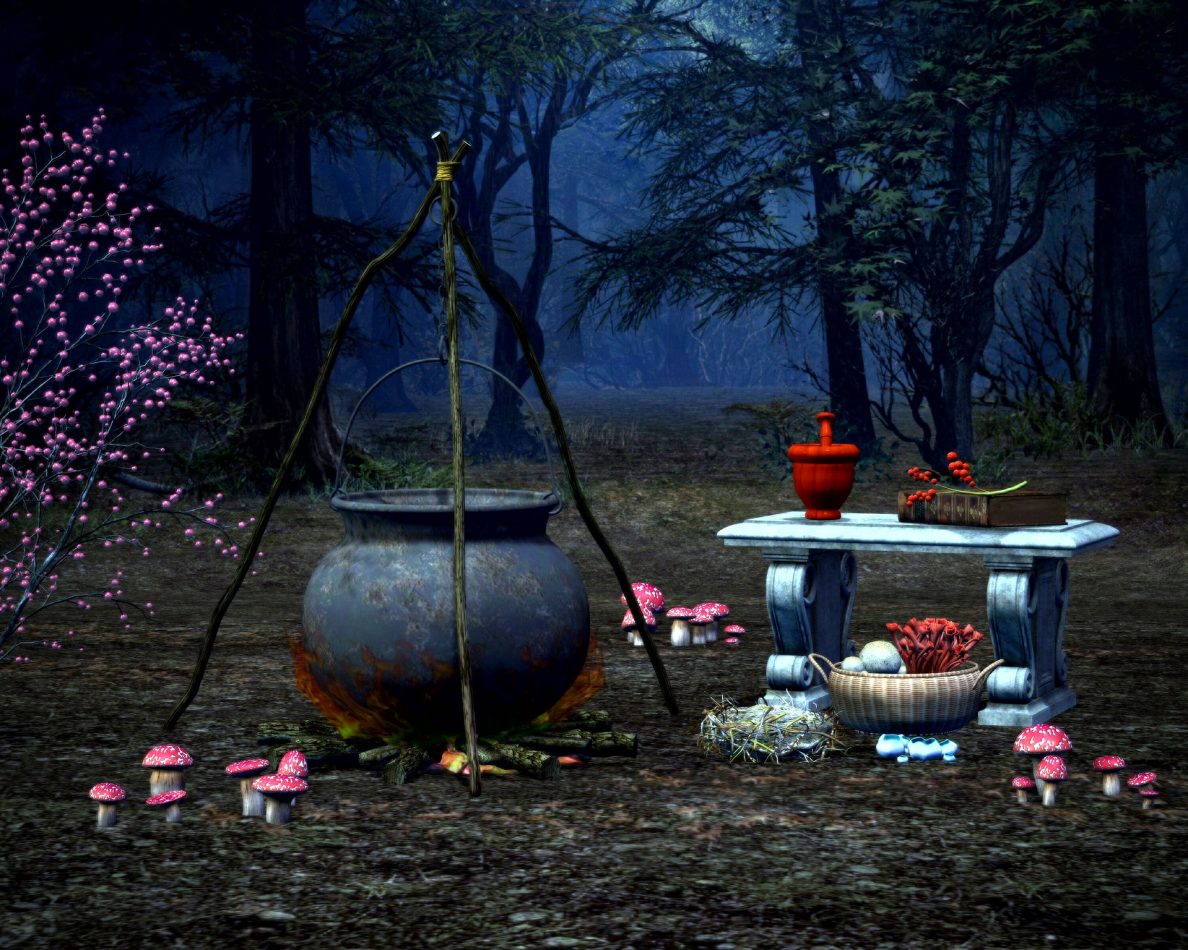
The two chief icons of the holiday are the spear (symbol of the Sun God in his glory) and the summer cauldron (symbol of the Goddess in her bounty). The precise meaning of these two symbols, which I believe I have recently discovered, will be explored in the essay on the death of Llew. But it is interesting to note here that modern Witches often use these same symbols in their Midsummer rituals. And one occasionally hears the alternative consecration formula, “As the spear is to the male, so the cauldron is to the female.” With these mythic associations, it is no wonder that Midsummer is such a joyous and magical occasion!


Document Copyright © 1983 – 2009 by Mike Nichols.
Text editing courtesy of Acorn Guild Press.
Gemstone of the Day for June 13th is Galena

Gemstone of the Day

Galena

(Color: lead to silver gray sometimes with a bluish tint)

Galena comes from the Greek word “galene”, lead ore

Hardness: 2.5+
Specific Gravity: approximately 7.5+
Chemistry: PbS, Lead Sulfide
Class: Sulfides
Crystallography: isometric
Cleavage: perfect in four direction forming cubes
Fracture: uneven and rarely seen because of the perfect cleavage
Streak: lead gray
Luster: metallic to dull

Healing: Galena is called a Stone of Harmony. Excellent for use in grounding. Galena reduces inflammation and increases circulation of the body. Used to increase the assimilation of selenium and zinc.

Do not use as an elixir.

Workings: Astrological sign is Capricorn. Vibrates to the master number 22 Use during meditation.

Chakra Applications: used to align the chakras

Foot Notes: Galena is the most important ore and the principal source of lead. It is found throughout the world. In the United States it is found inMissouri, Idaho, Iowa, Wisconsin, and Utah as well as in Australia, Canada, England, France, and Mexico. Galena specimens tarnish when exposed to air becoming dull in luster. Galena from certain regions is rich in silver.

Source:
Author: Crick
Website: The Whispering Woods

Herb of the Day for June 13th is Dill

Herb of the Day

Dill

Medicinal Uses: An ancient Egyptian remedy in the Ebers papyrus (c. 1500 BC) recommends dill as one of the ingredients in a pain-killing mixture. The Romans knew dill as “anethum” which latter became “anise”.

Dill is used to treat colic, gas, and indigestion. Dill has always been considered a remedy for the stomach, relieving wind and calming the digestion. Dill’s essential oil relieves intestinal spasms and griping and helps to settle colic, hence it is often used in gripe water mixtures.

Chewing the seeds improves bad breath. Dill makes a useful addition to cough, cold and flu remedies, and is a mild diuretic.
Dill increases milk production, and when taken regularly by nursing mothers, helps to prevent colic in their babies. To stimulate the flow of breast milk in nursing mothers bring one pint of white wine almost to a boil, remove from heat and add 1 tsp each of anise, caraway, coriander and dill. Bring one pint of white wine almost to a boil, remove from heat and add 4 tsp of dill seeds, let steep 30 minutes and strain. Drink 1 ½ cups a half hour before retiring to sleep well. Chewing dill seeds removes bad breath. Dill can also be made into a Tea, and sweetened with honey, or prepared as an infusion by steeping 2 teaspoons of seed in 1 cup of water for 10-15 minutes, then straining. Take 1- 2 cups per day.

Magickal uses: Dill is used in love and protection sachets. The dried seed heads hung in the home, over doorways, and above cradles provides protection. Add dill to your bath to make you irresistible to your lover. Place in the baby’s cradle for protection. Use in money spells.

Properties: Digestive, antibacterial, antispasmodic, diuretic. Contains volatile oil, consisting mainly of carvone with dihydrocarvone, limonene, a- and b-phellandrene, eugenol, anethole, myristicin, carveole, x-pinene. Flavonoids: kaempferol and its blucuronide, vicenin. Coumarins such as scopoletin, esculetin, bergapten, umbelliferone. Xanthone derivatives such as dillanoside. And triterpenes, phenolic acids, protein and fixed oil.

Growth: Dill grows in most regions of North America. It needs sun and a well-drained soil, and frequent waterings. It is a hardy annual, biennial in the deep southern regions, that reaches 2 – 3 feet tall. The leaves are bluish-green, bi-pinnate with fili-form leaflets; the base dilates into a sheath surrounding the stem. Flat, compound umbels of yellow flowers appear from July to September, producing eventually the oval, ribbed dill seeds. Dill matures quickly, and self-sows for the following year. Plant in six week intervals for a season-long supply of fresh dill.


Source:
Author: Crick
Website: The Whispering Woods

Deity of the Day for June 13th is Minerva Roman Goddess of Wisdom

Deity of the Day

Minerva

Roman Goddess of Wisdom


Areas of Influence: Minerva was the Goddess of wisdom and crafts.

Only in Rome was she worshiped as the Goddess of war.

This Goddess represented the application of intellect to everyday tasks. As the Goddess of wisdom she was accredited with inventing spinning, weaving, numbers and music. Her attributes were so numerous that Ovid described her as the “Goddess of a thousand works.”
She is also the patron of Goddess of medicine.

Origins and Genealogy: The name of this Goddess is said to be of Etruscan origin.

Her parents were Jupiter and Métis. Elements of the myths surrounding her birth however have been poached from Greek Goddess Athena, as she too is born fully grown, from her father’s head.

She was considered third among the Gods and Goddesses and was part of the Capitolian triad alongside Juna and Jupiter.

Strengths: Wisdom, creativity and strength.

Weaknesses: Out of touch with emotions.

Minerva’s Symbolism

The Roman Goddess of wisdom is depicted in full battle dress with a coat of mail, a helmet and a spear.

Sacred Animal/Insect: Owl and the spider.

Sacred Plants: Her sacred plants were the olive, mulberry and alder trees.

Festivals: The main festival celebrating this Goddess took place March 19th – 23rd.

A smaller festival occurred later in the year on the 13th of June.

Greek Equivalent: Athena

Minerva’s Archetypes

The Teacher/ Inventor:

The Teacher and Inventor communicates knowledge, experience and wisdom.

In it’s shadow aspect, the Teacher may manipulate and mislead their students by indoctrinating them with negative beliefs and destructive behaviours.

This is Minerva’s primary Archetype as she teaches humans how to spin and weave. She is also accredited in Roman mythology for inventing numbers and medicine.

The Warrior:

Archetype represents physical strength, and the ability to protect and fight for your rights and those of of others.

The shadow side of the Warrior reflects the need to win at all costs, abandoning ethical principles to prove your supremacy.

Although Roman mythology borrows heavily from it’s Greek counterparts, it is only in Rome that Minerva is worshipped as the Goddess of war, despite always being depicted in full battle dress. This is why I have ranked this Archetype as only of secondary importance for this Goddess.

How To Work With These Archetypes

The Teacher/Inventor:

This Archetype may suggest a love of passing on wisdom and learning to others.

This Goddess wise counsel can also be called upon to help you see a way through any present difficulties or to help you to master a new skill.

The shadow aspect of this stereo type is also a reminder that whenever we find ourselves in a teaching or mentoring role we must aim to be a positive role model, encouraging others to reach their full potential.

The Warrior:

If you are drawn to work with this Goddess you may require her Warrior spirit to help you to stand up for your rights and set firm personnal boundries. This Goddess can be a great stereotype to work with if you want to take control in your life, and wish to no longer play the role of the victim.

You may also wish to call upon this Goddess to champion the cause of others.

Conversely this Goddess may appeal to you if you have a very strong sense of self and are proud of the victories you have achieved. The shadow side may be asking you to reflect honestly on the cost of these victories. Have they been at the expense of others or your principals?


Source:

The Goddess-Guide.com