

Category: Articles
Your Animal Spirit Guide for April 18th is The Swan

Your Ancient Symbol Card for April 18th is Evil
Your Ancient Symbol Card for Today

Evil
At its extreme Evil indicates a life force that embodies pure malevolence. Fortunately Evil in the extreme is very rare. Generally Evil suggests actions taken that challenge our morality and without regard to the harm that may be done to others. The appearance of Evil signifies a time in which someone is acting out of rage, selfishness, ignorance, or, sadly, sating a mean spirit.
As a daily card Evil is a warning that you or your group are the focus of someone’s malice. This is time for you to be very wary of the motives of those who haven’t earned your trust. It is likely you have something they want and they are willing to go to extremes to take it from you.
Your Daily Witches Rune for April 18th is The Harvest

Today’s Witches Rune
April 18, 2016
The Harvest
Meaning: This is a very positive rune, related to abundance, rewards, growth and benefits. But it’s important to not mistake this rune for mere luck… while luck may help, the Harvest rune is usually related to the blessings that you have brought to yourself and to others, through your actions and investments.
“Reaping what you sow” is the message of the Harvest rune, but with a positive connotation. All that you worked and fought so hard to get will finally come to you, and you’ll be able to enjoy a time of tranquility, optimism and expansion. As the obstacles that were (or still are) in the way become smaller, you have a solid ground to reach out for your dreams.
Thus, the Harvest rune is a positive sign, telling you that you are in right path. However, it’s important to know that this symbol is always attached to personal responsibility… it’s what you do with your tools (whether they be mental, emotional or physical) that determines what you’ll get back in the end. Use them wisely, and luck will serve you well.
On a more negative side, this rune can make one sleep on their laurels and cling to past victories. One can become too reliant on “what works” and refuse to try new things (specially if the Crossroads rune is near). The Harvest runes should inspire you to take some risks and keep evolving, and not to crystalize yourself in one position because it proved to be successful.
In relationship readings, this symbol is connected to more practical aspects than emotional ones. Usually it represents couples who grow together, financially, socially and/or professionally. Security becomes an important factor when the Harvest appears. It represents the moment in which the couple begins to build their nest together, and think about starting a family. This rune tends to be very positive for all relationships, but doesn’t always inspire much passion.
Your Crowley Thoth Tarot Card for April 18th is The Chariot
Your Crowley Thoth Tarot Card for Today

The Chariot
The Chariot is the representation of Victory and the personality traits required to attain victory. The Chariot indicates self-awareness and control. Courage—the ability to overcome fear and confront the unknown head on–is a primary ingredient of any victorious campaign and is denoted by the Chariot. So too is force of will. Often success is as much the product of will power and a refusal to surrender as it is anything else. The Chariot also represents the healthy personality of someone who believes in themselves; someone who can take control of the situation and bring events to a positive end. His successes come in competition with others.
Your Daily I Ching Hexagram for April 18th is 19:Nearing

A Quick Reference Guide to the Meaning of the Viking Runes

Your Daily Rune for April 18th is Algiz

Your Weekly Tarot Card Reading for April 18th

Weekly Tarot Card Reading
A one-card reading gives you a glimpse at what’s coming

For the week of April 18, I chose the Queen of Wands!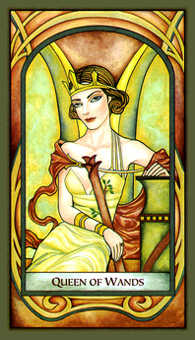
This week, you are the social butterfly! Full of confidence, you are ready and willing to meet new people, socialize with new networks, and put yourself out there. This is the perfect week for business networking, socializing and even dating.
If you’re an introvert and this all feels terrifying, why not challenge yourself to speak to at least one new person every day this week? You might be surprised at how easily it comes to you and how much you enjoy connecting with others.
So be ready to get out into the big wide world and be proud of who you are and what you represent. The world can’t wait to meet you!
Part of the Daily Insight Group
Your Daily Tarot Card for April 18th is The Chariot
Your Personal Daily Tarot Card

The Chariot
The Chariot is the representation of Victory and the personality traits required to attain victory. The Chariot indicates self-awareness and control. Courage—the ability to overcome fear and confront the unknown head on–is a primary ingredient of any victorious campaign and is denoted by the Chariot. So too is force of will. Often success is as much the product of will power and a refusal to surrender as it is anything else. The Chariot also represents the healthy personality of someone who believes in themselves; someone who can take control of the situation and bring events to a positive end. His successes come in competition with others.
Get A Jump On Tomorrow, Your Daily Horoscopes for Tuesday, April 19th
Get A Jump On Tomorrow…
Your Daily Horoscopes for Tuesday, April 19th
by Rick Levine
General Horoscope
We strive to find a moderate path between extremes today. On one hand, the Sun’s shift into earthy Taurus tells us to relax and enjoy the sweet pleasures of life. On the other hand, we’re haunted by the complexity of darker emotions that arise from the stressful square from sensual Venus to suspicious Pluto. Although we’re tempted to take sides, the Moon’s entry into objective Libra at 7:23 am EDT encourages us to consider both approaches.
Aries Horoscope MAR 21 – APR 19
Although you can make everything look easy, you’re likely having a tough time expressing your needs today. It’s doubly difficult if you can’t even acknowledge what you want to yourself. In fact, your emotional denial could quickly transform easygoing relationship dynamics into a tangle of complications. Thankfully, your positive attitude helps you work through a tricky situation if you’re willing to be vulnerable and explore your feelings. Where there’s a will, there’s a way.
Taurus Horoscope APR 20 – MAY 20
Your unrelenting determination is usually a strength, but your obstinate resistance to the truth could escalate a trivial misunderstanding into a major conflict. Although your ruling planet Venus raises concerns today as she crosses paths with uncompromising Pluto, ultimately the choice is still yours. You can avoid an unpleasant situation by demonstrating your willingness to cooperate with others. But you can’t just bury your feelings; you must change your attitude at the core. Internal transformation leads to external progress.
Gemini Horoscope MAY 21 – JUN 20
The intensity of your reactions makes you feel uncomfortable today, yet you might not understand the source of your agitation. However, pretending that everything is copacetic won’t improve interpersonal dynamics because denial strengthens your emotions instead of dissipating them. Acknowledging your anxiety is a smarter strategy as long as you don’t try to control the conversation. Simply confessing your discomfort to a supportive friend settles your nerves more than you expect.
Cancer Horoscope JUN 21 – JUL 22
Staying true to your feelings is no easy task today, especially if someone tries to persuade you to temper your position. Remaining open to a coworker’s point of view is an admirable goal, but not at the risk of suppressing your own desires. Of course, a difference of opinions takes time to resolve, but avoiding conflict now comes with a cost. Although there’s no need to overstate your cause, it pays to be clear about what you want right from the start. Transparency is your friend.
Leo Horoscope JUL 23 – AUG 22
A relationship with a coworker can grow complicated today because it’s nearly impossible to maintain objectivity when your emotions are involved. You might believe the awkwardness will pass quickly, but apparently there are no simple solutions to the current predicament. Nevertheless, minimizing your desires won’t work; you need to express them even if it temporarily upsets the applecart. Don’t try to avoid the need for change. A small shift in your perspective may be all it takes to improve your overall attitude.
Virgo Horoscope AUG 23 – SEP 22
Making the right choices in an emotionally volatile relationship doesn’t come easily today, even if you think you understand your partner’s position. As carefully as you listen to each and every word, you still might not be able to grasp the true meaning of what’s being said. Unfortunately, logic won’t ride to your rescue now; you’re better off responding from your heart without wasting time overanalyzing your feelings. Communication is a two-way street that demands respect at every corner.
Libra Horoscope SEP 23 – OCT 22
Someone’s actions may seem too abrupt today, stirring up old feelings of abandonment. But your current sense of rejection might be more connected to your past than to the present moment. It’s possible that others are just as emotionally overwhelmed and frustrated as you because they cannot easily express what’s going on in their hearts either. Words are not to be trusted now; however, your behavior clearly tells your story. Take the high road and see who follows.
Scorpio Horoscope OCT 23 – NOV 21
Your reaction to changes at work may be darker and more intense than anyone prefers, but it’s not your responsibility to make others comfortable by hiding your needs. Vulnerable Venus squares ruthless Pluto today, requiring you to face feelings that are buried in the depths of your subconscious. Express your emotions, but do it kindly and without blame. Magically, you are an inspiration when you remain true to your inner experience.
Sagittarius Horoscope NOV 22 – DEC 21
You might not consciously realize your feelings are coloring your perceptions today. Interactions with others are complicated by powerful emotions that make calm conversation impossible. Unfortunately, it’s tougher to separate your personal needs from a situation that demands objectivity now. Diving directly into the complexities moves you closer to the truth and teaches you something meaningful about yourself in the process.
Capricorn Horoscope DEC 22 – JAN 19
There’s no apparent straightforward path to your goals today. Nevertheless, your agenda is set in stone, and you’re not interested in changing it to make others feel more secure. But your eagerness to accomplish something special prompts you to overlook what someone else wants now. Although pursuing your ambitions can bring great rewards, don’t forget the importance of human connection. Make time to give those you love your shoulder to lean on in their time of need.
Aquarius Horoscope JAN 20 – FEB 18
An unresolved feeling lingers in your heart and it won’t go away until you address it. Naturally, the most direct solution is to discuss your concerns with a trustworthy confidant. Although you’re ready to spill the beans about a emotional problem, your casual tone might make it sound less important than it really is. Slow down to sink into your feelings now. You may be resistant at first, but the journey will be worthwhile in the end. Sometimes internal conflict is just a catalyst to make you smarter the next time around.
Pisces Horoscope FEB 19 – MAR 20
It feels as if you’re at the end of your rope now because your words keep slipping away before you can finish expressing what’s on your mind. Ironically, you know exactly what you want to say until you open your mouth. But even if you think you’re falling short of an adequate explanation today, don’t retreat until you give it your best shot. Initiating a conversation about your emotions is enough to get the ball rolling; surprisingly, there is more time than you think to get your message across.
Part of the Daily Insight Group
If You Were Born Today, April 18

If You Were Born Today, April 18
Your life is connected to change, and as a result, you are an interesting, knowledgeable, and perceptive person. You are good at communicating, humorous, and sociable, yet you have a distinct private streak. Others can find you baffling at times, not always knowing what to expect! You are creative and are happiest when you are creating something original. Routine career positions should be avoided.
Famous people born today: James Woods, Conan O’Brien, Melissa Joan Hart, Rick Moranis.
Your Birthday Year Forecast
This is an excellent year in which to advance projects revolving around communications – writing, speaking, selling, and so forth. Your reputation may be enhanced through word of mouth. Making new contacts through learning and mental pursuits figures strongly as well.
This can be a year in which you are building faith and confidence in your personality, skills, and talents. You can experience a stronger desire to seek out meaning, wisdom, and mental stimulation in your life during this period. Others might frequently turn to you for guidance.
Your ability to express yourself and to solve problems is enhanced this year. You may have opportunities to travel, and matters related to publishing, teaching, and writing should go especially well. You could also have big ideas and plans, as your mind is filled with ideas. The desire to expand your mind is strong, and this is a good year to take up studies or to further your education. It’s also excellent for teaching and speaking. With greater receptivity to new ideas and perspectives, you are more likely to attract positive energies into your life. You are likely to be popular with others when it comes to your ideas and communications, especially as you are communicating with optimism and cheerfulness, and this can bring rewarding experiences and opportunities into your life.
This is a good year, generally speaking, for motivation levels regarding work or projects and personal interests. There can be opportunities to pursue absorbing topics and projects of interest. More joy and meaning can be found in your work or obligations.
However, you need to be aware of a tendency to be attracted to impractical ventures at times this year. As well, your energy can vary greatly from one period to the next, so take advantage of the “high” periods in order to offset the possible loss in productivity during the low-energy stages.
Certain elements of your social life and financial life are stabilized, secured, and more reliable this year. You may solidify a romantic relationship or become involved with a mature partner. Circumstances may be such that you need to handle money more carefully this year, or this may simply come naturally to you now. Support from older people or authority figures may come by way of solid advice or more tangible help. Renewed ties to old friends are possible, or a new sense of responsibility in existing friendships, are also highly likely. However, you may be dealing with some power struggles in your relationships or regarding possessions and finances. Persistence will pay off in the end, and the need to remove yourself from overly stressful situations can become obvious.
This is a potentially excellent year for communications, learning, and connecting. Positive plans and lifestyle changes can be made at this time in your life. There will be times when you battle with varying energy levels, so take advantage of the periods of high motivation. There can be stabilizing energy in your relationships and a need to reorganize finances.
2016 is a Number Four year for you. Ruled by Uranus. This is a year of work and development. It’s “nose to the grindstone” time. It’s a time to deal with practical matters, and it’s not a time to be lazy or especially gregarious. Sometimes, it can be a year that feels hard, monotonous and routine, and/or lonely. Advice – get yourself organized, work to build your resources, keep busy.
2017 will be a Number Five year for you. Ruled by Mercury. This is a year of exploration and freedom. It’s a time when exploration and reaching out to others brings opportunities. It’s a good time to advertise and sell. Surprises are in store, and the routine is broken. This is a year when exciting relationships can be formed, or, if you are already in a partnership, new life is breathed into the relationship. Advice – explore, look for adventure, keep your eyes open for opportunities, mingle.
Courtesy of Cafe Astrology
Your Daily Horoscopes for Monday, April 18th

Your Daily Horoscopes for Monday, April 18th
Aries

Long-term career goals may be up for review over the coming months with Pluto, currently in your career and reputation sector, turning retrograde today, dear Aries. This yearly event is not unusual, but it comes at a time when Mars has just turned retrograde, reinforcing a need to look for answers within and to slow your pace. Changes need to be made in your approach, particularly to your career or long-term goals, and in time, you will see what these are. Facing up to truths about the past, and possibly a hard look at financial or intimacy matters, can be part of the picture now. While pressures and fears can be magnified now, particularly regarding life plan goals, the Pluto retrograde that lasts until the last week of September offers you some ability to detach and observe, and this helps you to gain a clearer perspective. A Venus-Saturn aspect occurring today can enhance or reinforce a connection. You could feel supported or reinforced when it comes to your opinions and ideas. Your negotiation skills are above par now, and your aim is to see eye to eye, but to remain true and honest at the same time. People are valuing you for your experience, perspective, and wisdom.
Taurus

Mars has just turned retrograde, dear Taurus, and today, the ruler of your partnership sector, Pluto, turns retrograde as well. Because Mars is retrograde only about 9% of the time and Pluto is retrograde about 45% of the time, the more significant retrograde of the two is Mars retrograde. However, Pluto does have its effects, and both affect your closest relationships. Until the last week of September, partnerships require more thought and perhaps strategy. You’ll want to let go of falseness in your interactions and you’re likely to take love matters more to heart. Outwardly, however, there is less of a tendency to take action. You might also be more reflective when it comes to your personal belief systems. In fact, you are a little more able to detach yourself just enough to gain an entirely new perspective on a partnership, educational path, belief system, personal philosophy, or long-term project – all areas of life that Pluto is currently touching. Today, a Venus-Saturn influence tends to give you more clout and reinforces your practical, reliable side. There is a stronger appreciation for those things that have long-term value, as well as people with whom you feel comfortable.
Gemini

Mars has just turned retrograde, dear Gemini, and you may be rethinking certain projects and interests. Today, Pluto turns retrograde – a yearly occurrence that lasts several months. If give and take are grossly unbalanced in a relationship, or if you are worrying about the loyalty of a person in your life, these issues can be magnified now with Pluto stationing in your intimacy sector. Health and work matters, especially related to matters of control or fear, can also come into focus now. Over the coming months, review of current wellness programs, routines, work projects, the sharing of power, intimate relationships, and/or shared finances and debt is in order. This is an excellent time for detaching yourself a little in order to see what has been tripping you up, as well as for doing research and collecting information. While problems may seem magnified now, the retrograde cycle itself is far easier and natural. A Venus-Saturn influence today inclines you towards practical ideas, as well as stable people and situations. Ideas that were only on the drawing board tend to come together now. Sometimes it really pays off to humble yourself by allowing others “in” on your problems, and today is one of those times. You could benefit from others’ experience and wisdom.
Cancer

Pluto turns retrograde today, dear Cancer. This occurs every year and lasts just over four months. The shift itself as Pluto stations and changes directions today can act to magnify problem areas that already exist, particularly surrounding control issues in close relationships. Be aware that people can be especially sensitive. However, the retrograde itself is far less dramatic. It tends to internalize issues and it can prompt to you to review your love relationships over the coming months. There is a tendency to cling to old patterns or to examine the past rather than to push forward into all-new territory. Today, you are in a good position to strengthen your future by taking care of the present. Honoring your responsibilities can be satisfying now. It’s a good day for dedicating yourself to a project or activity that requires focus and concentration. This can also be a fine day for reinforcing a bond or strengthening a relationship through taking positive, supportive action.
Leo

Mars has just turned retrograde, dear Leo, and today, Pluto stations retrograde as well. However, retrograde Pluto is a far more common occurrence, as it spends almost half of the year retrograde. Today’s station can temporarily magnify problem areas, however, particularly related to work, family, home, and health matters. Over the coming months, a shift in attitude towards work projects and health programs is likely, as you begin to take on a more observational rather than dynamic or active role. This is a good cycle for research, as well as loosening some of the tight control you have over your daily routines and work. A Venus-Saturn influence today is a stabilizing one. You are finding more value in consistency and reliability, particularly in the people you care about. There can be a feeling of greater balance in a relationship, but also in your life, as you seem to be able to divide your time well between work and pleasure. Perhaps due to a person or project, you can be feeling pleasantly anchored.
Virgo

With Pluto stationing and turning retrograde in your sector of romance, creativity, children, and recreation today, dear Virgo, there can be a temporary magnification of problems in these areas, before pressure begins to subside. While Pluto will remain retrograde for many months, there can be a feeling of heaviness around the time of the shift this week, as fears can be magnified and you can temporarily feel as if you have little control over these areas of life. Mars is also at a station, and this reinforces the need to take things slowly, as changes of mind can occur easily now. Save important decision making for a time when you are clearer emotionally. With a slower approach, you are able to see possibilities and to make connections that you may have overlooked in the past. Conservative steps are favored now. You might bond with someone you love or care about today.
Libra

Pluto comes to a station today, dear Libra, as it turns retrograde for just over four months. This yearly occurrence tends to initially magnify fears and ambitions, and for you, this is especially the case surrounding finances, family, and home matters. Over the coming months, you are likely to review these matters and adjust your plans accordingly. In fact, you may be able to detach from some of the pressures and fears that have been driving your behavior. Today’s Venus-Saturn connection is a stabilizing one. You are drawn to steady, reliable activities, people, and situations. You can come across as dignified and yet friendly today. A constructive conversation with a friend or partner can figure prominently today. Mutual cooperation and understanding boost your affection.
Scorpio

Your ruler, Pluto, turns retrograde early today, dear Scorpio, and until the last week of September, you’re in a strong position for searching deep within for answers. You’re a little more introspective during this several-month influence. Looking to the past (without dwelling on it) is an important process that can help you to see, more clearly, what things need to change. This retrograde cycle is a strong one for self-observation and a bit of a break from pushing yourself too hard mentally, and with Mars, your co-ruler, retrograde as well, this is especially important this year. During the shift occurring right now, you could be feeling a little disoriented, but this is temporary. It’s about adapting and acclimatizing right now. A Venus-Saturn influence helps to ground you today. You may feel needed, respected, and valued, and you enjoy making people you care about feel the same way. You are more conservative and discriminating in your tastes and handling of money right now, and can actually derive satisfaction from being prudent in your choices today.
Sagittarius

Further reinforcement of the need to slow down and to make important refinements and adjustments to your plans comes today, dear Sagittarius, with Pluto’s station. There can be some matters to handle from the past that need your attention, or feelings of guilt to deal with. Delays or changing motivation levels may need to be contended with now, and a reassessment of what you truly value becomes important. Financial matters may need review. This process will take many months, and even though it may feel intense as the shift occurs now, it’s likely to become less urgent as you go along. Today’s Venus-Saturn influence supports strengthening relationships, particularly with friends and lovers, and children, if applicable. This is a good time to dedicate yourself to something or someone special. Your powers of attraction today lie in your strength and commitment, discretion, and reliability. You are not interested in fleeting excitement right now, preferring spending time with trusted friends or family.
Capricorn

Pluto in your sign comes to a station and turns retrograde today, dear Capricorn. The day’s energy can be intense, as fears and worries may be temporarily magnified. However, this subsides quickly, and the retrograde cycle itself, lasting for just over four months, is very useful. You are in a better position to observe and detach yourself just enough to see where you may have been tripping up, particularly with regards to over-controlling tendencies. A Venus-Saturn influence today can be very helpful. Life slows down long enough for you to appreciate what you have going for you. A relationship can deepen through the sharing of something personal, private, or previously hidden. It’s a good day for sharing ideas and personal philosophies, and for tolerance of differing viewpoints. You might gravitate towards someone who is a bit older than you or a reliable long time friend to spend some time with. Your personal appeal is strong right now.
Aquarius

Mars reached a retrograde station yesterday and Pluto does so today, dear Aquarius. There can be some intensifying of fears, worries, or frustrations just for now as the shifts occur. For you, with Pluto in your solar twelfth house, there can be a possibly obsessive focus on problems of the past. Take the time to review your feelings, but don’t let them distract you from your current path for very long. In fact, very soon this intense energy will subside and you can really benefit from this retrograde period that lasts just over four months. This is a good time for observing and understanding your deepest feelings, attachments, and fears. In fact, while Pluto has been direct, you may not have truly “seen” how fears, guilt, and control issues have been working against you. Now you have the chance to make the connections and work on healing and resolving problems. Today’s Venus-Saturn influence is a stabilizing, supportive aspect. Solid energy is with you for attracting or enhancing a relationship. People might turn to you as a mentor.
Pisces

Mars turned retrograde yesterday, dear Pisces, and this can bring some changes of interests and motivation levels. Pluto stations retrograde today, and long term goals are up for revision over the coming months. Although this can feel pressing right now, you in fact have a lot of time to reconsider your approach to going after your dreams and goals. As well, friendships can have a heavy energy hanging over them today. Once the intensity of the station passes, this retrograde period that lasts until the last week of September is powerful for taking a step back and examining your fears, resentments, and possibly even self-destructive tendencies rather than living on auto pilot. It’s a strong time for healing. A Venus-Saturn aspect today has a settling, stable influence. Easy energy is with you for expressing your more competent and responsible side. Developing or employing the skills you already have is more important to you than inventing or innovating, and this can be of great benefit to you at this time.
Your Love Horoscopes for the Week of April 18th

Love Horoscopes for the Week of April 18th
-
General Horoscope
Your love life will have quite a few ups and downs this week. On Monday, Venus will trine Saturn, offering an opportunity to sober up and appreciate a good solid relationship (if you are blessed enough to have one). But on Tuesday, you might feel as if love is an all-or-nothing situation thanks to Venus squaring off with Pluto. Chaos ensues by Friday as Venus embraces Uranus. Will the need for excitement derail any stability you and your lover thought you had? Stay tuned…
-
Aries Horoscope MAR 21 – APR 19
Your need for independence may be off the charts this week. If your lover is trying to tie you down in any way, you’ll run for the hills. You appear to have no use for a traditional relationship that forces you and your mate to conform to specific roles and rules. Instead, you need a love life that honors your identity and need for breathing room. Can you have it all? You won’t settle for anything less.
-
Taurus Horoscope APR 20 – MAY 20
Although it appears that your ruling planet, Venus, will be on a roller coaster ride this week, you’re likely to come out of it rejuvenated instead of unraveled. Honoring the wide spectrum of feelings you have connected to love and relationship will be the secret sauce to the success of your romantic recipe. Feeling jealous? Don’t deny it. Feeling suffocated? Talk it through. Feeling secure? Be sure to mention it. A Full Moon in your partnership sector on Friday suggests fulfillment is the final outcome.
-
Gemini Horoscope MAY 21 – JUN 20
The happiest day of your love life this week will be Monday. Venus and Saturn will connect perfectly allowing you and your partner to move forward toward building a solid foundation behind a shared aspiration. On Tuesday however, you might feel as if you can’t agree on a financial matter no matter how hard you try. Remember, ultimatums will get you nowhere. If single, a sexy someone might come out of nowhere on Friday.
-
Cancer Horoscope JUN 21 – JUL 22
If you’re in a relationship, it’s possible that this week you’ll feel a lack of support from your partner. In particular, this might come out if you have a major career opportunity you want to take advantage of. While you’ll be excited, your partner may somehow view this as a threat. Although it’ll be difficult, try to have a reasonable conversation. If you’re dating someone new, things might take a turn on Friday. Romantic feelings will be intense.
-
Leo Horoscope JUL 23 – AUG 22
If you’re in a relationship, your love life might feel steady and under control on Monday. You and your sweetheart might realize that your spiritual beliefs are more aligned than you previously thought. As a result, your bond will deepen without you even having to make an effort. If you’re single, a sudden romantic development might occur on Friday. You could meet someone quite unusual who takes your breath away!
-
Virgo Horoscope AUG 23 – SEP 22
Sparks fly, but that doesn’t mean you won’t have a mess to clean up. On Tuesday, you may have trouble letting your lover really see you. This might be a problem with physical or emotional intimacy, but the running theme is trust. Ask yourself why this is coming up now and be honest with the answer. Depending on how this process goes, on Friday, you might be ready to open up to an erotic experiment with your partner. It’ll be quite memorable.
-
Libra Horoscope SEP 23 – OCT 22
Make the most of the steady energy between you and your mate on Monday because after that, it’ll be difficult to feel as if you’re on an even keel with one another. On Tuesday, you may suddenly have a major brawl about a domestic matter. Then, by Friday, it’s possible that your partner will do something so out of character, you’ll be left scratching your head, wondering if he or she is serious.
-
Scorpio Horoscope OCT 23 – NOV 21
To say that you’ll be emotionally charged this week is an understatement. On Friday, a Full Moon in your sign will open you up to even greater depth potential. You might feel extra vulnerable if there’s a situation brewing between you and your mate. Your stinger may come out if you worry you’re about to get hurt. At the same time however, you’ll feel motivated to achieve significant bonding with your partner. As long as you can trust him or her, of course.
-
Sagittarius Horoscope NOV 22 – DEC 21
You might not be able to keep up with all of the ups and downs this week in your love life. On Monday, you’ll think everything is under control but don’t be fooled — you’ll quickly lose traction. On Tuesday, it’s possible that you and your lover will fight harder than ever before about a money matter. Then, on Friday, an unexpected move from your sweetie might leave you rattled. If single, you may have an opportunity for a sexual encounter.
-
Capricorn Horoscope DEC 22 – JAN 19
On Monday, you and your sweetheart might begin to secretly plan to move in together. Or, it’s possible that you’ll discreetly initiate looking into purchasing a new home, or leasing a new apartment. On Tuesday however, one of your relatives or a family situation itself might threaten your romantic harmony. Don’t allow this to happen. Decide that a relationship is between two people, not your entire tribe. You’ll take care of this matter by Friday.
-
Aquarius Horoscope JAN 20 – FEB 18
Your friends might have the most supportive advice to offer this week connected to your love life. Be sure to reach out to one of your pals on Monday if you need any guidance. If you’re single, one of your siblings might set you up on a date with an unusual dating prospect this Friday. You’ll be intrigued because this person doesn’t appear to be your usual type. Explore the potential. At the very least, it’ll be exciting.
-
Pisces Horoscope FEB 19 – MAR 20
Your lover might offer tremendous support as you pursue a career goal this Monday, but you may soon feel suspicious that he or she has an ulterior motive. On Tuesday, there might be a hint that your lover wants you to succeed because he or she is looking for personal gain. If you worry that your lover wants to ride on your coattails, you may begin to feel resentful. Talk about it before it all gets out of hand.
Part of the Daily Insight Group
Astrology of Today – April 18, 2016
Astrology of Today – April 18, 2016

Summary:
- The Moon is in Virgo all day (until Tuesday, April 19th, at 7:23 AM).
- The Moon is void from 8:29 AM forward (until tomorrow at 7:23 AM).
- The Moon is waxing and in its Waxing Gibbous phase.
- A First Quarter Moon occurred on the 13/14 and a Full Moon will occur on the 22nd.
- Mercury is in its pre-retrograde shadow (Mercury will retrograde from April 28-May 22).
- Pluto stations retrograde today.
- Mars is retrograde (Mars is retrograde from April 17-June 29).
Your Weekly Astrology: April 18-24, 2016
Weekly Astrology: April 18-24, 2016
Plunging into the depths

It’s time to go below the surface this week as internal feelings intensify…
Monday, April 18: Pluto Retrograde; Venus trine Saturn
The dark side of Pluto will become more internalized starting Monday, as he begins his long retrograde phase. The outer planet’s retrograde will affect you deeply if it passes over one of your personal planets. During the next several months, until September 26, you will be called to look deep inside for answers. Don’t fight it.
Venus will also trine Saturn on Monday, offering the only day this week to enjoy stability in love. After that, things will get dicey.
Tuesday, April 19: Sun enters Taurus; Venus square Pluto
On Tuesday, the Sun enters Taurus and it’ll be a feast of the senses for all! Venus will square Pluto however, and it’s possible that lust, obsession, and jealousy will prevail. The power of love is emphasized, but in a way that makes it all too easy to misuse this power. Beware!
Friday, April 22: Full Moon in Scorpio; Venus conjunct Uranus
On Friday, a Full Moon in Scorpio illuminates the depths even more. Fortunately, this Full Moon will make a gorgeous link to Neptune, which can help inspire us to reach the heights as we plumb through our dark matter. Venus is conjunct Uranus on the same day, and nothing will be as it seems in matters of the heart.
Part of the Daily Insight Group
Calendar of the Moon for Monday, April 18th
Calendar of the Moon
Willow Tree Month
Colors: Yellow, silver, and pale willow-green
Element: Water
Altar: Upon cloth of yellow, silver, and pale willow-green place three white candles, wreaths of willow-branches, a large clay bowl of water, flowers if they are available, and a silver moon.
Offerings: Contemplate an emotion, and how you use it, and how it uses you.
Daily Meal: Vegetarian, preferably cold food. Fruits. Only spring water to drink.
Saille Invocation
Call: Now is the time of the Willow Goddess.
Response: Now is the time of the Green Man’s courting.
Call: Now is the time when leaves are full.
Response: Now is the time when gold gives way to silver.
Call: Now is the time when Sun gives way to Moon.
Response: Now is the time when Lord gives way to Lady.
Call: Now is the time of the search and the quest.
Response: Now is the time of magic dew on the fields.
Call: Now is the time of the phallus rising.
Response: He seeks the doorway that is wet with spring rains.
Call: He seeks the moon in the river.
Response: He seeks the fishes in the winnowing basket.
Call: He seeks the fruit of Persephone.
Response: He seeks the mountain of the Muses.
Call: We crown his head with flowers….
Response: That he may reach the sky.
Call: We crown his head with ribbons….
Response: That he may touch the earth.
Call: We bring forth the pole from earth to sky.
Response: We lay the line from earth to sky.
Call: We blow like the wind from earth to sky.
Response: We fall like the rain from sky to earth.
Call: We descend like the sunlight from sky to earth.
Response: We climb like the trees from sky to earth.
Call: We are the children of earth and sky.
Response: We are beloved of sky and earth.
Chant:
We all come from the Goddess, and to Her we shall return,
Like a drop of rain, flowing to the ocean.
Calendar of the Sun for Monday, April 18th
Calendar of the Sun
Carista – Day of Peace in the Family
Color: Lavender
Element: Water
Altar: Upon a lavender cloth set a tray of cakes shaped like clasping hands, and many cups full of hot tea.
Offerings: Promise to attempt to be more considerate of those you live with.
Daily Meal: Any food, but it must be served from one great plate for every table, and it should not be in separate portions.
Carista Invocation
May there be Peace in this house.
(Response: “May there be peace in this house!”)
Peace can be a hard mistress.
The daily round of the ordinary,
The simple turn of day and night and day
The presence of the same souls
Can come to be like a shadow on the sun,
And yet Peace still demands
That we find a way to move past
That ordinariness
And all the thousand thorns and briars
And bring Peace into the house.
(Response: “May there be peace in this house!”)
Take the hand of your sister, your brother,
The one who shares your roof, your table,
The ground you walk on,
Whose feet know the boards as well as your own,
And swear to find a way
To bring peace into the space between you.
(Response: “May there be peace in this house!”)
Chant:
My brother, my heart, my sister, my soul;
My family, my life, come in from the cold;
My sister, my heart, my brother, my soul;
My family, my life, that makes this life whole.
(Instead of a ritual, this period of time should be used to mediate and address problems between members of the community, with emphasis on peacemaking and compromise and useful solutions. At the end of the meeting, all share cakes and tea.)
Your Weekly Karma Forecast for April 17 – 23
Weekly Forecast: April 17 – 23, 2016

The Karmic Tools Weekly Forecast covers the current planetary transits which affect people in different ways and to various degrees of intensity. Take notice when it is a Personal planet (Sun / Moon / Mercury / Venus / Mars) interacting with a Social (Jupiter/Saturn) or Collective planet (Uranus / Neptune/Pluto). And pay extremely close attention when it is a Social planet interacting with a Collective planet because that means something *big* is brewing that will move large groups of people along their evolutionary paths. Tuning in to the energy and rhythm of the planets can serve as a useful *guide* as you move along your Individual Path. It also helps to understand your place within the context of the larger Social & Collective Story. Below, you will find out how these energies tend to manifest, as well as guidance and direction.
*NOTE* There are some days when there are NO CONTACTS (besides the Moon), please note that there are no missing entries, we just list the actual Activations of each week + the day they happen.
Weekly Forecast: April 17 – 23, 2016
4/17 ~ Mercury (ideas, thoughts & concepts) ~trine~ Pluto (rebirth & transformation):
This activation makes any deep delving within easier and more fruitful. It encourages you to ask the deeper questions, clarify your deeper feelings and trust your intuitive gut feelings that are telling you something has to die so some other aspect of your consciousness can live. You will want to explore your inner Self, sort through recently gathered information and try to understand better what your natural process really is. It is best to be alone for such research. Take a day or a weekend and grab your most powerful books & music and get somewhere beautiful if you can, if not, then your bedroom will do just as well – and dig deep! You are finally ready for the deeper truth, and you will be transformed by what you learn. If you must communicate with others, plan on that being deep as well, so best to talk to a trusted advisor or wise elder. Nothing superficial today. The only warning with this energy is not to become obsessive about one particular idea – and certainly don’t try to force any ideas on others. If you feel the deep need to focus on one particular thing, that is fine but try to keep some perspective or write down all your revelations so you can reflect on them at a later time when you can be more objective and prioritize better.
4/18 ~ Venus (values & priorities) ~trine~ Saturn (stability & endurance):
This is a smooth, easy energy that you can work with consciously and yield incredible, even tangible, results. It’s a good time to define your terms where relationships are concerned because you are clear about your values & priorities. Based on your past choices & efforts, positive benefits & rewards are forthcoming. If you’ve avoided responsibility in your own relationships (public or private), then this energy can help get you back on track, with less pain & suffering than usual (when Saturn’s involved). If you can be practical about your own limits and realistic about what others bring to the table, then this energy also supports discussing forward movement, development or spiraling to a new, higher level in some way, as a team. Strategizing about the future, clarifying the vision of what will support & protect all involved and honoring the essence of life that runs throughout is deeply supported by these two getting together in an easy angle. Venus is also the energy of love & money, so it’s a good time to be objective and somewhat conservative where both your relationships & finances are concerned. With this interaction with Saturn, I would suggest outlining a reasonable relationship or financial goals for the next 3 – 6 – 12 months.
4/19 ~ Venus (your values) ~square~ Pluto (transformation):
This activation brings intensity and it challenges you to grow (out of comfort zone, into new territory) where your relationships & finances are concerned. You’ve probably already felt it coming (the shift in your relationship or financial situation), well, it’s here now, so you can be proactive on your own behalf or you can suffer the consequences of postponing the inevitable. (You may have heard me say: Pay now or pay double later. That applies to this transit too.) The natural reaction may be to try to hold on to the job or relationship, but try not to give in to that temptation. Pluto intensifies everything and the more you resist the necessary purification & change that Pluto brings, the more painful it usually is. It is better to clarify your values & priorities and choose change, rather than have it forced (more Pluto) upon you. Either way, once the dust settles, you should be better off because things either change for the better or go away altogether making room for something new and more in-alignment with your values & priorities of ‘now’.
4/22 ~ Venus (relationships, love & money) ~conjunct~ Uranus (awakening & liberation):
This is an initiation of some wildly new values & priorities which have bubbling within for a while now. You are supported to shift, without apology, and remember, when you change, everything/one around you changes or goes away. Same-old, same-old will not do at this time and you are supported for thinking outside the box, especially where conscious equal partnership is concerned. We are in a new era, the Aquarian Age, that supports the individual within the context of the whole. And we are all learning how to do that on micro-levels, within our own individual relationships. Use this activation to release resistance and open to the new, shake things up and look at your life from a completely different perspective and see if you don’t find renewed value in some places and others that have completely run their course and can easily be released. Finally, pay close attention to any innovative ideas that come up around this time – they could be useful down the line.
The Current Moon Phase for April 18th is Waxing Gibbous
April 18
Waxing Gibbous
Illumination: 88%
The Moon today is in a Waxing Gibbous phase. This phase is when the moon is more than 50% illuminated but not yet a Full Moon. The phase lasts round 7 days with the moon becoming more illuminated each day until the Full Moon. During a Waxing Gibbous the moon will rise in the east in mid-afternoon and will be high in the eastern sky at sunset. The moon is then visible though most of the night sky setting a few hour before sunrise. The word Gibbous first appeared in the 14th century and has it’s roots in the Latin word “gibbous” meaning humpbacked.
Phase Details for – Monday, April 18, 2016
Phase: Waxing Gibbous
Illumination: 88%
Moon Age: 11.44 days
Moon Angle: 0.50
Moon Distance: 400,666.03 km
Sun Angle: 0.53
Sun Distance: 150,261,218.26 km
Illumination: 88%
Moon Age: 11.44 days
Moon Angle: 0.50
Moon Distance: 400,666.03 km
Sun Angle: 0.53
Sun Distance: 150,261,218.26 km


You must be logged in to post a comment.