Astronomy Picture of the Day

Discover the cosmos! Each day a different image or photograph of our fascinating universe is featured, along with a brief explanation written by a professional astronomer.

2022 January 2
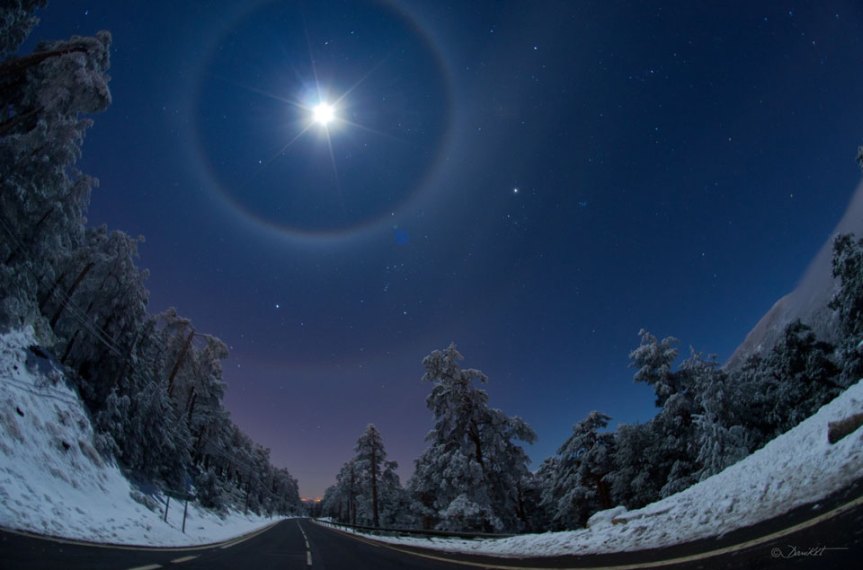
Quadruple Lunar Halo Over Winter Road

Image Credit & Copyright: Dani Caxete

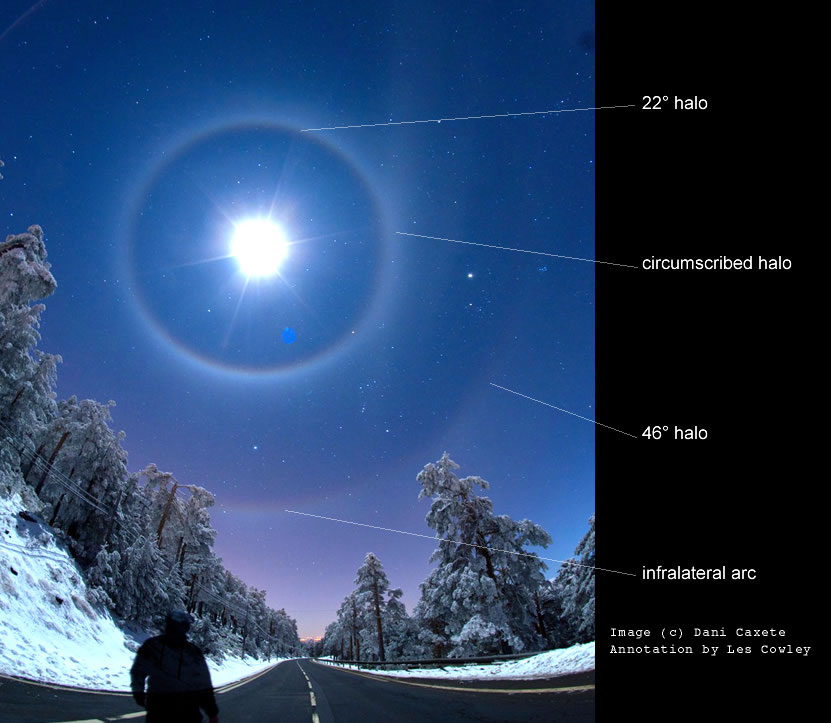
Explanation: Sometimes falling ice crystals make the atmosphere into a giant lens causing arcs and halos to appear around the Sun or Moon. One Saturday night in 2012 was just such a time near MadridSpain, where a winter sky displayed not only a bright Moon but four rare lunar halos. The brightest object, near the top of the featured image, is the Moon. Light from the Moon refracts through tumbling hexagonal ice crystals into a somewhat rare 22-degree halo seen surrounding the Moon. Elongating the 22-degree arc horizontally is a more rare circumscribed halo caused by column ice crystals. Even more rare, some moonlight refracts through more distant tumbling ice crystals to form a (third) rainbow-like arc 46 degrees from the Moon and appearing here just above a picturesque winter landscape. Furthermore, part of a whole 46-degree circular halo is also visible, so that an extremely rare — especially for the Moon — quadruple halo was captured. Far in the background is a famous winter skyscape that includes Sirius, the belt of Orion, and Betelgeuse — visible between the inner and outer arcs. Halos and arcs typically last for minutes to hours, so if you do see one there should be time to invite family, friends or neighbors to share your unusual lensed vista of the sky.
Astronomy Picture of the Day

(I did not post the wrong picture for today, January 1, 2022)

Discover the cosmos! Each day a different image or photograph of our fascinating universe is featured, along with a brief explanation written by a professional astronomer.

2022 January 1

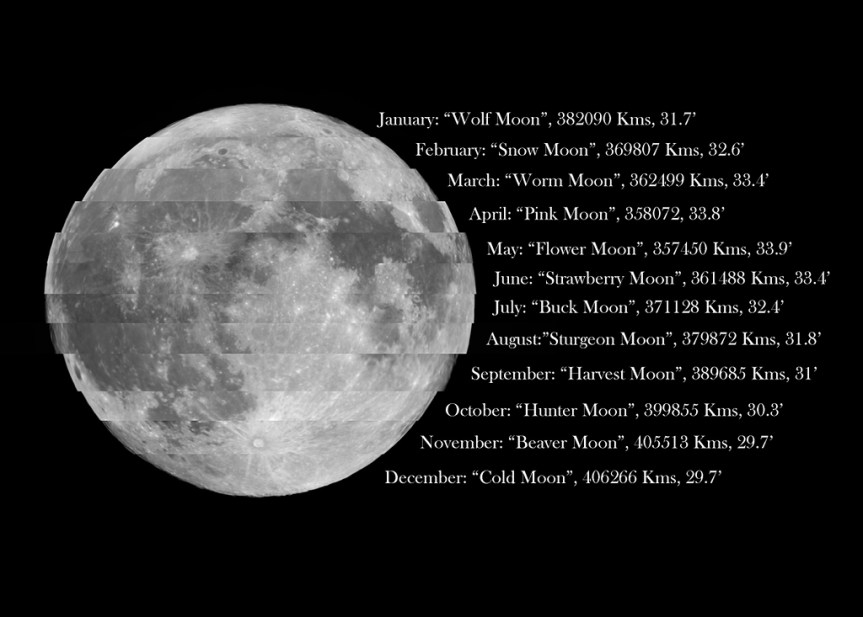
The Full Moon of 2021

Image Credit & Copyright: Soumyadeep Mukherjee

Explanation: Every Full Moon of 2021 shines in this year-spanning astrophoto project, a composite portrait of the familiar lunar nearside at each brightest lunar phase. Arranged by moonth, the year progresses in stripes beginning at the top. Taken with the same camera and lens the stripes are from Full Moon images all combined at the same pixel scale. The stripes still looked mismatched, but they show that the Full Moon’s angular size changes throughout the year depending on its distance from Kolkata, India, planet Earth. The calendar month, a full moon name, distance in kilometers, and angular size is indicated for each stripe. Angular size is given in minutes of arc corresponding to 1/60th of a degree. The largest Full Moon is near a perigee or closest approach in May. The smallest is near an apogee, the most distant Full Moon in December. Of course the full moons of May and November also slid into Earth’s shadow during 2021’s two lunar eclipses.

2021 Year in Review Astronomy Picture of the Day

From apod.nasa.gov

2021 December 31: JWST on the Road to L2
2021 December 30: The Further Tail of Comet Leonard
2021 December 29: Giant Storms and High Clouds on Jupiter
2021 December 28: Sun Halo over Sweden
2021 December 27: Comet Leonard behind JWST Launch Plume
2021 December 26: James Webb Space Telescope over Earth
2021 December 25: The Tail of a Christmas Comet
2021 December 24: M1: The Crab Nebula
2021 December 23: Three Planets and a Comet
2021 December 22: Launch of the IXPE Observatory
2021 December 21: Solstice Sun and Milky Way
2021 December 20: The Comet and the Fireball
2021 December 19: Planetary Alignment over Italy
2021 December 18: Stephan s Quintet
2021 December 17: Gemind of the North
2021 December 16: Geminds of the South
2021 December 15: Comet Leonard from Space
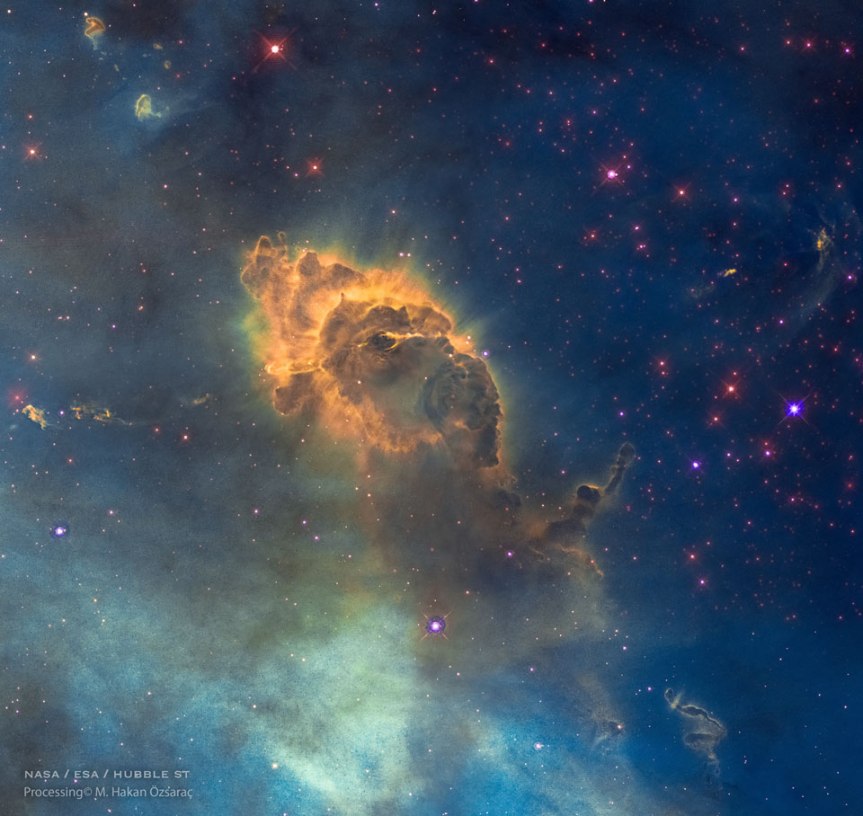
2021 December 14: HH 666: Carina Dust Pillar with Jet
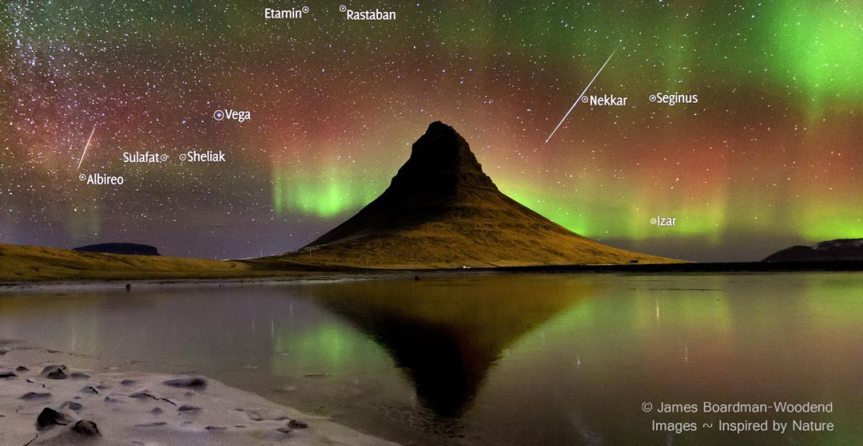
2021 December 13: Meteors and Auroras over Iceland
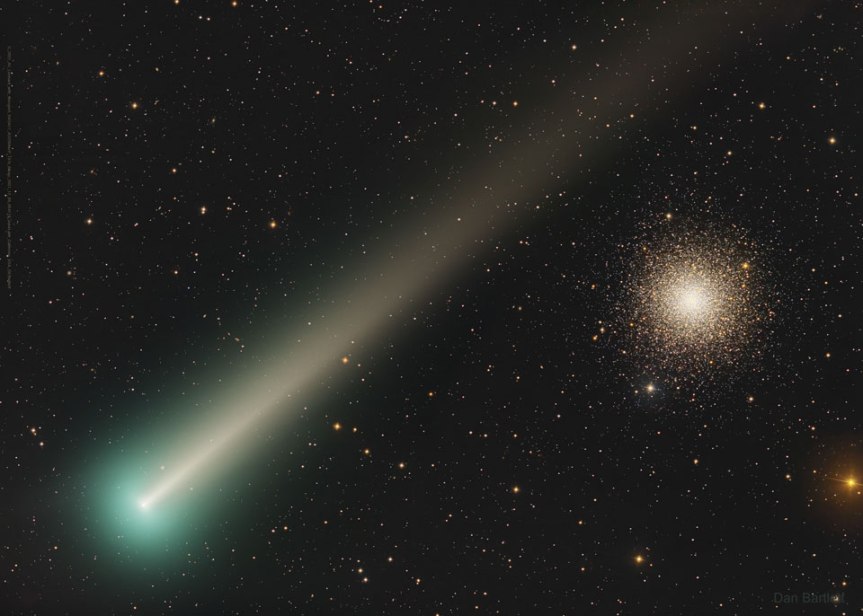
2021 December 12: Comet Leonard Before Star Cluster M3
2021 December 11: Postcard from the South Pole
2021 December 10: Eclipse on a Polar Day
2021 December 09: A Total Eclipse of the Sun
2021 December 08: Comet Hale Bopp Over Val Parola Pass
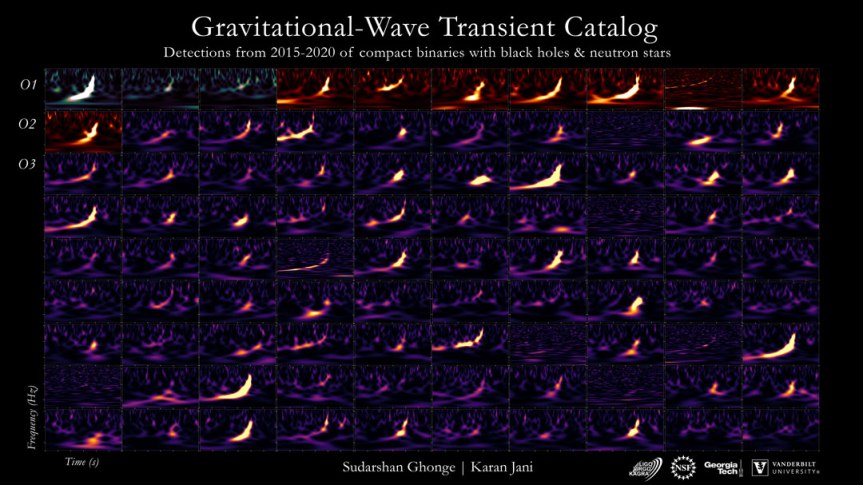
2021 December 07: Ninety Gravitational Wave Spectrograms and Counting
2021 December 06: Space Station Silhouette on the Moon
2021 December 05: Total Solar Eclipse Below the Bottom of the World
2021 December 04: Iridescent by Moonlight
2021 December 03: Comet Leonard and the Whale Galaxy
2021 December 02: NGC 6822: Barnard s Galaxy
2021 December 01: A Blue Banded Blood Moon
2021 November 30: In Motion: Uranus and Moons
2021 November 29: The Extraordinary Spiral in LL Pegasi
2021 November 28: A High Cliff on Comet Churyumov Gerasimenko
2021 November 27: Messier 101
2021 November 26: Great Refractor and Lunar Eclipse
2021 November 25: At the Shadow’s Edge
2021 November 24: Pleiades: The Seven Sisters Star Cluster
2021 November 23: The Sun in X-rays from NuSTAR
2021 November 22: Lunar Eclipse over a Skyscraper
2021 November 21: Introducing Comet Leonard
2021 November 20: An Almost Total Lunar Eclipse
2021 November 19: NGC 281: Starless with Stars
2021 November 18: Full Moonlight
2021 November 17: NGC 3314: When Galaxies Overlap
2021 November 16: Geminids from Gemini
2021 November 15: Light Pillar over Volcanic Etna
2021 November 14: How to Identify that Light in the Sky
2021 November 13: Rosetta’s Comet in Gemini
2021 November 12: M33: The Triangulum Galaxy
2021 November 11: NGC 1333: Stellar Nursery in Perseus
2021 November 10: Video of a Green Flash
2021 November 09: All of These Space Images are Fake Except One
2021 November 08: A Filament Leaps from the Sun
2021 November 07: The Cat’s Eye Nebula in Optical and X-ray
2021 November 06: The Galaxy Between Two Friends
2021 November 05: The Dark Seahorse in Cepheus
2021 November 04: NGC 147 and NGC 185
2021 November 03: The Horsehead and Flame Nebulas
2021 November 02: SN Requiem: A Supernova Seen Three Times So Far
2021 November 01: A Waterfall and the Milky Way
2021 October 31: Dark Matter in a Simulated Universe
2021 October 30: A Rorschach Aurora
2021 October 29: Haunting the Cepheus Flare
2021 October 28: Mirach’s Ghost
2021 October 27: NGC 6995: The Bat Nebula
2021 October 26: Jupiter Rotates
2021 October 25: Road to the Galactic Center
2021 October 24: Halloween and the Ghost Head Nebula
2021 October 23: 3D Bennu
2021 October 22: A Comet and a Crab
2021 October 21: SH2-308: The Dolphin-head Nebula
2021 October 20: Lucy Launches to Eight Asteroids
2021 October 19: Palomar 6: Globular Star Cluster
2021 October 18: Earthshine Moon over Sicily
2021 October 17: The Einstein Cross Gravitational Lens
2021 October 16: The Moona Lisa
2021 October 15: NGC 289: Swirl in the Southern Sky
2021 October 14: NGC 7293: The Helix Nebula
2021 October 13: NGC 7822: Cosmic Question Mark
2021 October 12: Fireball over Lake Louise
2021 October 11: Juno Flyby of Ganymede and Jupiter
2021 October 10: Full Moon Silhouettes
2021 October 09: 50 Light years to 51 Pegasi
2021 October 08: The Double Cluster in Perseus
2021 October 07: NGC 6559: East of the Lagoon
2021 October 06: M43: Streams of Orion
2021 October 05: Sunrise at the South Pole
2021 October 04: NGC 4676: When Mice Collide
2021 October 03: The Holographic Principle and a Teapot
2021 October 02: A Light and Dusty Night
2021 October 01: The Central Milky Way from Lagoon to Pipe
2021 September 30: The Hydrogen Clouds of M33
2021 September 29: Gigantic Jet Lightning from Puerto Rico
2021 September 28: Night of the Perseids
2021 September 27: Unwrapped: Five Decade Old Lunar Selfie
2021 September 26: The Red Square Nebula
2021 September 25: The Bubble and the Star Cluster
2021 September 24: Perseid Outburst at Westmeath Lookout
2021 September 23: Harvest Moon Trail
2021 September 22: Equinox on a Spinning Earth
2021 September 21: Sun Spot Hill
2021 September 20: Lynds Dark Nebula
2021 September 19: Rings and Seasons of Saturn
2021 September 18: Rubin’s Galaxy
2021 September 17: Video: Flash on Jupiter
2021 September 16: North America and the Pelican
2021 September 15: Cyclone Paths on Planet Earth
2021 September 14: Mars Panorama 360 from Curiosity
2021 September 13: Night Sky Reflected
2021 September 12: A Spiral Aurora over Iceland
2021 September 11: Saturn at Night
2021 September 10: Rosetta’s Comet in View
2021 September 09: M16 Close Up
2021 September 08: The Deep Sky Toward Andromeda
2021 September 07: NGC 520: Colliding Galaxies from Hubble
2021 September 06: Firefly Milky Way over Russia
2021 September 05: Earth and Moon
2021 September 04: A Falcon 9 Nebula
2021 September 03: NGC 7023: The Iris Nebula
2021 September 02: M51: The Whirlpool Galaxy
2021 September 01: Dancing Ghosts: Curved Jets from Active Galaxies
2021 August 31: A Blue Moon in Exaggerated Colors
2021 August 30: A Fire Rainbow over West Virginia
2021 August 29: Orbits of Potentially Hazardous Asteroids
2021 August 28: Mars Rock Rochette
2021 August 27: Elephant’s Trunk and Caravan
2021 August 26: A Blue Hour Full Moon
2021 August 25: Solar System Ball Drop
2021 August 24: PDS 70: Disk, Planets, and Moons
2021 August 23: Abell 3827: Cannibal Cluster Gravitational Lens
2021 August 22: Explosions from White Dwarf Star RS Oph
2021 August 21: Triple Transit and Mutual Events
2021 August 20: Three Perseid Nights
2021 August 19: Bright Meteor, Starry Sky
2021 August 18: Rings Around the Ring Nebula
2021 August 17: M57: The Ring Nebula from Hubble
2021 August 16: Perseid Meteor, Red Sprites, and Nova RS Oph
2021 August 15: Perseid Rain
2021 August 14: Island Universe, Cosmic Sand
2021 August 13: A Perfect Spiral
2021 August 12: A Beautiful Trifid
2021 August 11: Mammatus Clouds over Saskatchewan
2021 August 10: Fire in Space
2021 August 09: Perseus and the Lost Meteors
2021 August 08: A Perseid Below
2021 August 07: Jezero Crater: Raised Ridges in 3D
2021 August 06: Stars and Dust Across Corona Australis
2021 August 05: Tycho and Clavius
2021 August 04: EHT Resolves Central Jet from Black Hole in Cen A
2021 August 03: A Perseid Meteor and the Milky Way
2021 August 02: The Hubble Ultra Deep Field in Light and Sound
2021 August 01: Pluto in Enhanced Color
2021 July 31: Remembering NEOWISE
2021 July 30: Mimas in Saturnlight
2021 July 29: The Tulip and Cygnus X 1
2021 July 28: Ring Galaxy AM 0644 741
2021 July 27: Flemings Triangular Wisp
2021 July 26: CG4: A Ruptured Cometary Globule
2021 July 25: Crescent Neptune and Triton
2021 July 24: The Edge of Space
2021 July 23: Elephant, Bat, and Squid
2021 July 22: NGC 7814: Little Sombrero with Supernova
2021 July 21: Colors: Ring Nebula versus Stars
2021 July 20: Thor’s Helmet
2021 July 19: Framed by Trees: A Window to the Galaxy
2021 July 18: The Andromeda Galaxy in Ultraviolet
2021 July 17: Alphonsus and Arzachel
2021 July 16: Love and War by Moonlight
2021 July 15: The Dark Tower in Scorpius
2021 July 14: GW200115: Simulation of a Black Hole Merging with a Neutron Star
2021 July 13: Saturn’s Iapetus: Painted Moon in 3D
2021 July 12: M27: The Dumbbell Nebula
2021 July 11: Find the Moon
2021 July 10: Mercury and the Da Vinci Glow
2021 July 09: M82: Starburst Galaxy with a Superwind
2021 July 08: Perihelion to Aphelion
2021 July 07: Flight Through the Orion Nebula in Infrared Light
2021 July 06: Saturn and Six Moons
2021 July 05: IC 4592: The Blue Horsehead Reflection Nebula
2021 July 04: The Face on Mars
2021 July 03: Along the Milky Way
2021 July 02: AR2835: Islands in the Photosphere
2021 July 01: Perseverance Selfie with Ingenuity
2021 June 30: Simulation: Formation of the First Stars
2021 June 29: Orion Nebula: The Hubble View
2021 June 28: A Paper Moon Solar Eclipse
2021 June 27: The Dancing Auroras of Saturn
2021 June 26: Pixels in the Sun
2021 June 25: Andromeda in a Single Shot
2021 June 24: Messier 99
2021 June 23: STARFORGE: A Star Formation Simulation
2021 June 22: HD 163296: Jet from a Star in Formation
2021 June 21: The Tadpole Galaxy from Hubble
2021 June 20: Sunrise Solstice over Stonehenge
2021 June 19: Northern Summer Twilight
2021 June 18: Devil Horns from a Ring of Fire
2021 June 17: NGC 6888: The Crescent Nebula
2021 June 16: Scorpius Enhanced
2021 June 15: Zhurong: New Rover on Mars
2021 June 14: Ganymede from Juno
2021 June 13: A Supercell Thunderstorm Over Texas
2021 June 12: Eclipse on the Water
2021 June 11: Eclipse Flyby
2021 June 10: Circular Sun Halo
2021 June 09: A Total Lunar Eclipse Corona
2021 June 08: A Face in the Clouds of Jupiter from Juno
2021 June 07: A Bright Nova in Cassiopeia
2021 June 06: A Distorted Sunrise Eclipse
2021 June 05: The Shining Clouds of Mars
2021 June 04: Blood Monster Moon
2021 June 03: Millions of Stars in Omega Centauri
2021 June 02: The Galactic Center in Stars, Gas, and Magnetism
2021 June 01: Satellites over Orion
2021 May 31: Mimas: Small Moon with a Big Crater
2021 May 30: Aurora over Clouds
2021 May 29: Lunar Dust and Duct Tape
2021 May 28: Total Lunar Eclipse from Sydney
2021 May 27: Mid-Eclipse and Milky Way
2021 May 26: The Outburst Clouds of Star AG Car
2021 May 25: The Moon During a Total Lunar Eclipse
2021 May 24: Lightning Eclipse from the Planet of the Goats
2021 May 23: The Galaxy Tree
2021 May 22: Markarian’s Chain
2021 May 21: Utopia on Mars
2021 May 20: M13: The Great Globular Cluster in Hercules
2021 May 19: The Jellyfish and Mars
2021 May 18: Jets from the Necklace Nebula
2021 May 17: NGC 4565: Galaxy on Edge
2021 May 16: NGC 602 and Beyond
2021 May 15: The Southern Cliff in the Lagoon
2021 May 14: M104: The Sombrero Galaxy
2021 May 13: The Comet, the Whale, and the Hockey Stick
2021 May 12: A Meteor and the Gegenschein
2021 May 11: Lightning and Orion Beyond Uluru
2021 May 10: Star Clusters M35 and NGC 2158
2021 May 09: Horsehead and Orion Nebulas
2021 May 08: Deepscape at Yacoraite
2021 May 07: Mercury-Redstone 3 Launch
2021 May 06: Windblown NGC 3199
2021 May 05: STEVE over Copper Harbor
2021 May 04: Space Station, Solar Prominences, Sun
2021 May 03: Apollo 11: Earth, Moon, Spaceship
2021 May 02: Clouds of the Carina Nebula
2021 May 01: Perseverance from Ingenuity
2021 April 30: Pink and the Perigee Moon
2021 April 29: Apollo 17: The Crescent Earth
2021 April 28: North Star: Polaris and Surrounding Dust
2021 April 27: Animation: Black Hole Star Shredder
2021 April 26: A Sagittarius Triplet
2021 April 25: Planetary Nebula Mz3: The Ant Nebula
2021 April 24: Streak and Plume from SpaceX Crew2 Launch
2021 April 23: Flying Over the Earth at Night II
2021 April 22: Planet Earth at Twilight
2021 April 21: Centaurus As Warped Magnetic Fields
2021 April 20: Ingenuity: First Flight over Mars
2021 April 19: The Galactic Center in Infrared
2021 April 18: Rainbow Airglow over the Azores
2021 April 17: Inside the Flame Nebula
2021 April 16: The Doubly Warped World of Binary Black Holes
2021 April 15: The Galaxy, the Jet, and a Famous Black Hole
2021 April 14: The Pencil Nebula Supernova Shock Wave
2021 April 13: Confirmed Muon Wobble Remains Unexplained
2021 April 12: Alnitak and the Flame Nebula
2021 April 11: When Black Holes Collide
2021 April 10: Zodiacal Night
2021 April 09: Messier 106
2021 April 08: 3D Ingenuity
2021 April 07: Threads of NGC 1947
2021 April 06: Mars and the Pleiades Beyond Vinegar Hill
2021 April 05: Veil Nebula: Wisps of an Exploded Star
2021 April 04: In, Through, and Beyond Saturn’s Rings
2021 April 03: Ingenuity on Sol 39
2021 April 02: NGC 3521: Galaxy in a Bubble
2021 April 01: Rocket Launch as Seen from the Space Station
2021 March 31: M87’s Central Black Hole in Polarized Light
2021 March 30: Red Sprite Lightning over the Andes
2021 March 29: M64: The Evil Eye Galaxy
2021 March 28: SuitSat 1: A Spacesuit Floats Free
2021 March 27: Exploring the Antennae
2021 March 26: The Medusa Nebula
2021 March 25: Curiosity: Sol 3048
2021 March 24: Aurorae and Lightning on Jupiter
2021 March 23: Mars over Duddo Stone Circle
2021 March 22: From Auriga to Orion
2021 March 21: The Antikythera Mechanism
2021 March 20: The Leo Trio
2021 March 19: Central Lagoon in Infrared
2021 March 18: Stardust in the Perseus Molecular Cloud
2021 March 17: The Surface of Venus from Venera 14
2021 March 16: IC 1318: The Butterfly Nebula in Gas and Dust
2021 March 15: Meteor Fireballs in Light and Sound
2021 March 14: A Flag Shaped Aurora over Sweden
2021 March 13: SuperCam Target on Maaz
2021 March 12: Messier 81
2021 March 11: Zodiacal Light and Mars
2021 March 10: NGC 1499: The California Nebula
2021 March 09: Perseverance 360: Unusual Rocks and the Search for Life on Mars
2021 March 08: Three Tails of Comet NEOWISE
2021 March 07: Pillars of the Eagle Nebula in Infrared
2021 March 06: Perseverance Takes a Spin
2021 March 05: A Little Like Mars
2021 March 04: Mars in Taurus
2021 March 03: Stars over an Erupting Volcano
2021 March 02: Ingenuity: A Mini Helicopter Now on Mars
2021 March 01: The Pelican Nebula in Red and Blue
2021 February 28: The Aurora Tree
2021 February 27: Perseverance Landing Site from Mars Reconnaissance Orbiter
2021 February 26: Mars Perseverance Sol 3
2021 February 25: A Venus Flyby
2021 February 24: Spiral Galaxy M66 from Hubble
2021 February 23: Video: Perseverance Landing on Mars
2021 February 22: Moon Rising Between Starships
2021 February 21: NGC 2244: A Star Cluster in the Rosette Nebula
2021 February 20: Perseverance: How to Land on Mars
2021 February 19: Mars Perseverance Sol 0
2021 February 18: Swiss Alps, Martian Sky
2021 February 17: Sun Pillar with Upper Tangent Arc
2021 February 16: Perseverance: Seven Minutes to Mars
2021 February 15: Landing on Mars: Seven Minutes of Terror
2021 February 14: Long Stem Rosette Nebula
2021 February 13: Stereo Eros
2021 February 12: Spiral Galaxy NGC 1350
2021 February 11: Cygnus Mosaic 2010 2020
2021 February 10: Firing Lasers to Tame the Sky
2021 February 09: Flashes of the Crab Pulsar
2021 February 08: WR32 and Interstellar Clouds in Carina
2021 February 07: Blue Straggler Stars in Globular Cluster M53
2021 February 06: A Northern Winter Night
2021 February 05: Apollo 14 Heads for Home
2021 February 04: Apollo 14: A View from Antares
2021 February 03: Found on the Moon: Candidate for Oldest Known Earth Rock
2021 February 02: A Colorful Quadrantid Meteor
2021 February 01: Lunar Halo over Snowy Trees
2021 January 31: Asteroids in the Distance
2021 January 30: Southern Sky at 38,000 Feet
2021 January 29: North American Nightscape
2021 January 28: Messier 66 Close Up
2021 January 27: The Vertical Magnetic Field of NGC 5775
2021 January 26: Central NGC 1316: After Galaxies Collide
2021 January 25: Southern Cross over Chilean Volcano
2021 January 24: Massive Nearby Spiral Galaxy NGC 2841
2021 January 23: Recycling Cassiopeia A
2021 January 22: The Milky Ring
2021 January 21: M78 Wide Field
2021 January 20: The Magnetic Field of the Whirlpool Galaxy
2021 January 19: A Lunar Corona with Jupiter and Saturn
2021 January 18: The Medulla Nebula Supernova Remnant
2021 January 17: Jets from Unusual Galaxy Centaurus A
2021 January 16: The Mountains of NGC 2174
2021 January 15: A Plutonian Landscape
2021 January 14: Aurora Slathers Up the Sky
2021 January 13: Arches Across an Arctic Sky
2021 January 12: A Historic Brazilian Constellation
2021 January 11: Moon Phases in 2021
2021 January 10: Star Cluster R136 Breaks Out
2021 January 09: Titan: Moon over Saturn
2021 January 08: NGC 1365: Majestic Island Universe
2021 January 07: Total Solar Eclipse 2020
2021 January 06: Striped Sand Dunes on Mars
2021 January 05: The Small Cloud of Magellan
2021 January 04: Sprite Lightning at 100000 Frames Per Second
2021 January 03: A Phoenix Aurora over Iceland
2021 January 02: 21st Century Wet Collodion Moon
2021 January 01: Galaxies and the South Celestial Pole

Astronomy Picture of the Day

Discover the cosmos! Each day a different image or photograph of our fascinating universe is featured, along with a brief explanation written by a professional astronomer.

2021 December 31

JWST on the Road to L2

Image Credit & Copyright: Malcolm Park (North York Astronomical Association)

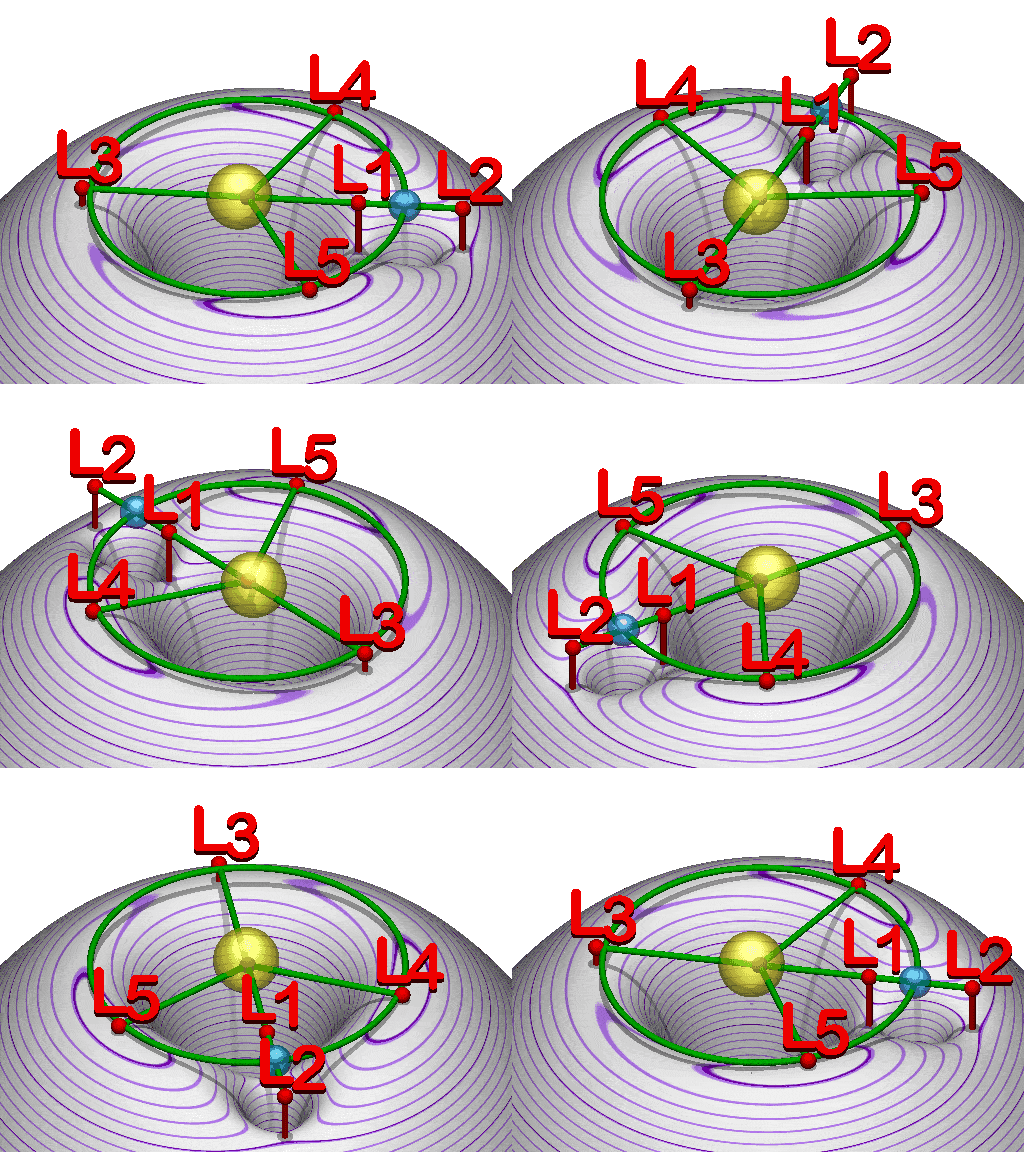
Explanation: This timelapse gif tracks the James Webb Space Telescope as it streaks across the stars of Orion on its journey to a destination beyond the Moon. Recorded on December 28, 12 consecutive exposures each 10 minutes long were aligned and combined with a subsequent color image of the background stars to create the animation. About 2.5 days after its December 25 launch, JWST cruised past the altitude of the Moon’s orbit as it climbed up the gravity ridge from Earth to reach a halo orbit around L2, an Earth-Sun Lagrange point. Lagrange points are convenient locations in space where the combined gravitational attraction of one massive body (Earth) orbiting another massive body (Sun) is in balance with the centripetal force needed to move along with them. So much smaller masses, like spacecraft, will tend to stay there. One of 5 Lagrange points, L2 is about 1.5 million kilometers from Earth directly along the Earth-Sun line. JWST will arrive at L2 on January 23, 29 days after launch. While relaxing in Earth’s surface gravity you can follow the James Webb Space Telescope’s progress and complicated deployment online.

Astronomy Picture of the Day

Discover the cosmos! Each day a different image or photograph of our fascinating universe is featured, along with a brief explanation written by a professional astronomer.

2021 December 30

The Further Tail of Comet Leonard

Image Credit & Copyright: Daniele Gasparri

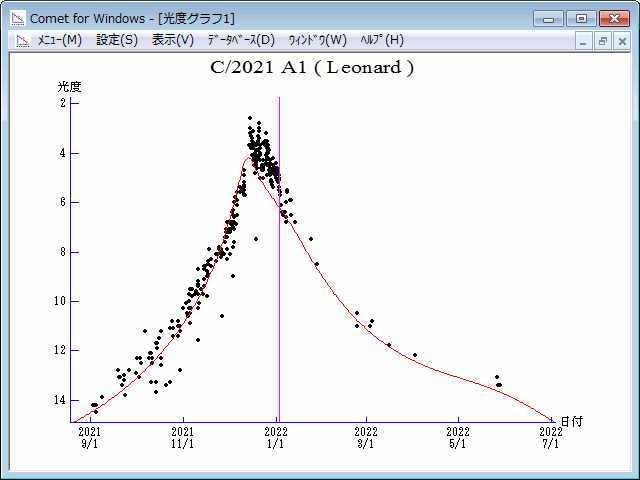
Explanation: Comet Leonard, brightest comet of 2021, is at the lower left of these two panels captured on December 29 in dark Atacama desert skies. Heading for its perihelion on January 3 Comet Leonard’s visible tail has grown. Stacked exposures with a wide angle lens (also displayed in a reversed B/W scheme for contrast), trace the complicated ion tail for an amazing 60 degrees, with bright Jupiter shining near the horizon at lower right. Material vaporizing from Comet Leonard’s nucleus, a mass of dust, rock, and ices about 1 kilometer across, has produced the long tail of ionized gas fluorescing in the sunlight. Likely flares on the comet’s nucleus and buffeting by magnetic fields and the solar wind in recent weeks have resulted in the tail’s irregular pinched and twisted appearance. Still days from its closest approach to the Sun, Comet Leonard’s activity should continue. The comet is south of the Solar System’s ecliptic plane as it sweeps through the southern constellation Microscopium.

Astronomy Picture of the Day

Discover the cosmos! Each day a different image or photograph of our fascinating universe is featured, along with a brief explanation written by a professional astronomer.

2021 December 29

Giant Storms and High Clouds on Jupiter

Image Credit: NASA/JPL-Caltech/SwRI/MSSS; Processing & LicenseKevin M. Gill

Explanation: What and where are these large ovals? They are rotating storm clouds on Jupiter imaged last month by NASA’s Juno spacecraft. In general, higher clouds are lighter in color, and the lightest clouds visible are the relatively small clouds that dot the lower oval. At 50 kilometers across, however, even these light clouds are not small. They are so high up that they cast shadows on the swirling oval below. The featured image has been processed to enhance color and contrast. Large ovals are usually regions of high pressure that span over 1000 kilometers and can last for years. The largest oval on Jupiter is the Great Red Spot (not pictured), which has lasted for at least hundreds of years. Studying cloud dynamics on Jupiter with Juno images enables a better understanding of dangerous typhoons and hurricanes on Earth.


Follow APOD in English on: FacebookInstagramPodcastReddit, or Twitter

Astronomy Picture of the Day

Discover the cosmos! Each day a different image or photograph of our fascinating universe is featured, along with a brief explanation written by a professional astronomer.

2021 December 28

Sun Halo over Sweden

Video Credit & Copyright: Håkan Hammar (Vemdalen Ski ResortSkiStar)

Explanation: What’s happened to the Sun? Sometimes it looks like the Sun is being viewed through a giant lens. In the featured video, however, there are actually millions of tiny lenses: ice crystals. Water may freeze in the atmosphere into small, flat, six-sided, ice crystals. As these crystals flutter to the ground, much time is spent with their faces flat and parallel to the ground. An observer may find themselves in the same plane as many of the falling ice crystals near sunrise or sunset. During this alignment, each crystal can act like a miniature lens, refracting sunlight into our view and creating phenomena like parhelia, the technical term for sundogs. The featured video was taken in late 2017 on the side of a ski hill at the Vemdalen Ski Resort in central Sweden. Visible in the center is the most direct image of the Sun, while two bright sundogs glow prominently from both the left and the right. Also visible is the bright 22 degree halo — as well as the rarer and much fainter 46 degree halo — also created by sunlight refracting through atmospheric ice crystals.

Astronomy Picture of the Day

Discover the cosmos! Each day a different image or photograph of our fascinating universe is featured, along with a brief explanation written by a professional astronomer.

2021 December 27

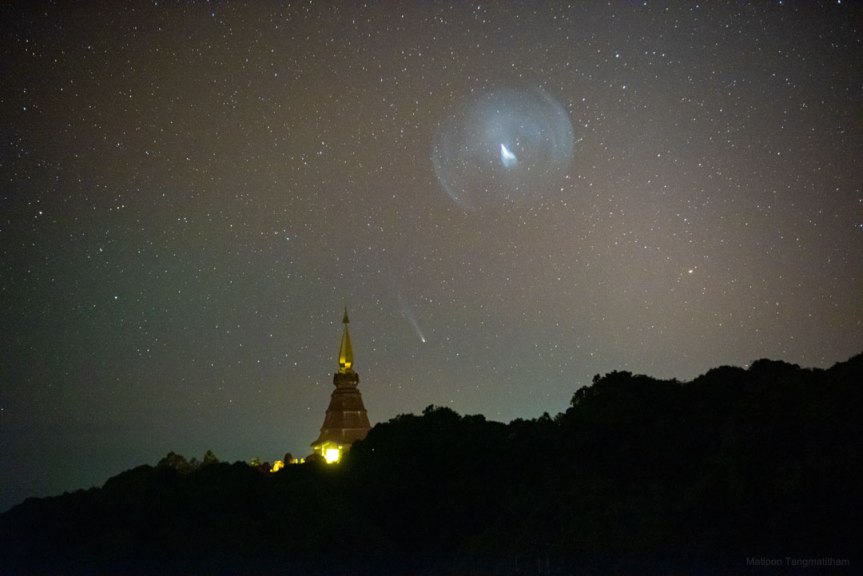
Comet Leonard behind JWST Launch Plume

Image Credit & Copyright: Matipon Tangmatitham (NARIT)


Explanation: Which one of these two streaks is a comet? Although they both have comet-like features, the lower streak is the only real comet. This lower streak shows the coma and tail of Comet Leonard, a city-sized block of rocky ice that is passing through the inner Solar System as it continues its looping orbit around the Sun. Comet Leonard has recently passed its closest to both the Earth and Venus and will round the Sun next week. The comet, still visible to the unaided eye, has developed a long and changing tail in recent weeks. In contrast, the upper streak is the launch plume of the Ariane V rocket that lifted the James Webb Space Telescope (JWST) off the Earth two days ago. The featured single-exposure image was taken from Thailand, and the foreground spire is atop a pagoda in Doi Inthanon National ParkJWST, NASA’s largest and most powerful space telescope so far, will orbit the Sun near the Earth-Sun L2 point and is scheduled to start science observations in the summer of 2022.


Gallery: Comet Leonard 2021
Gallery: Webb Space Telescope Launch: 2021 December 25

Astronomy Picture of the Day

Discover the cosmos! Each day a different image or photograph of our fascinating universe is featured, along with a brief explanation written by a professional astronomer.

2021 December 26

James Webb Space Telescope over Earth

Image Credit: ArianespaceESANASACSACNES

Explanation: There’s a big new telescope in space. This one, the James Webb Space Telescope (JWST), not only has a mirror over five times larger than Hubble‘s in area, but can see better in infrared light. The featured picture shows JWST high above the Earth just after being released by the upper stage of an Ariane V rocket, launched yesterday from French Guiana. Over the next month, JWST will move out near the Sun-Earth L2 point where it will co-orbit the Sun with the Earth. During this time and for the next five months, JWST will unravel its segmented mirror and an array of sophisticated scientific instruments — and test them. If all goes well, JWST will start examining galaxies across the universe and planets orbiting stars across our Milky Way Galaxy in the summer of 2022.


APOD Gallery: Webb Space Telescope Launch

Astronomy Picture of the Day

Discover the cosmos! Each day a different image or photograph of our fascinating universe is featured, along with a brief explanation written by a professional astronomer.

2021 December 24

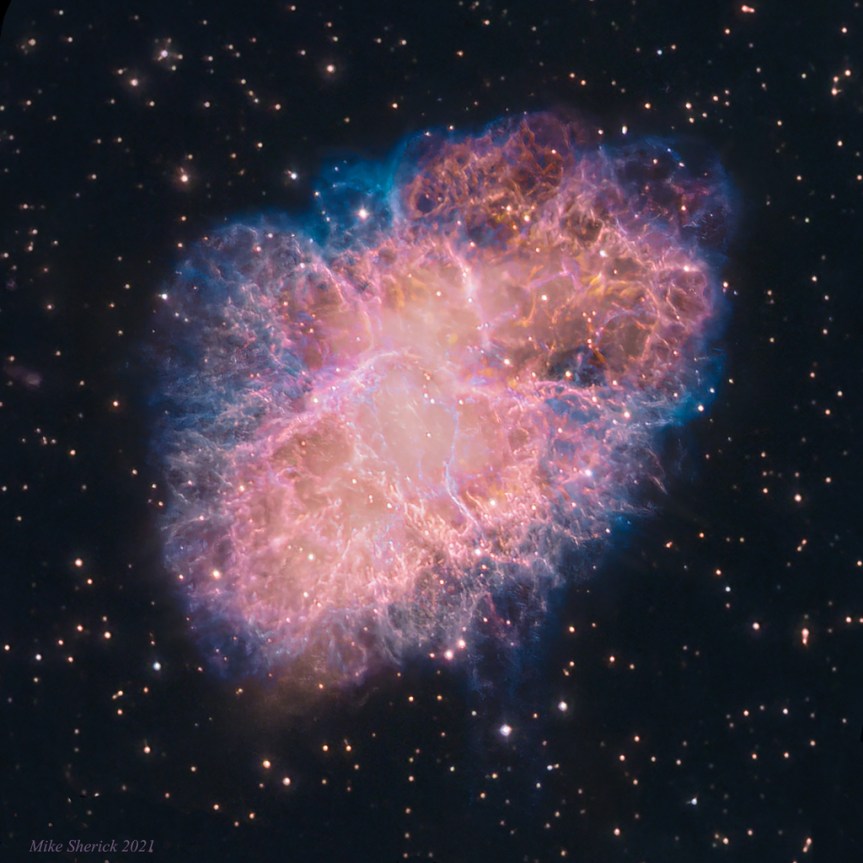
M1: The Crab Nebula

Image Credit & Copyright: Michael Sherick

Explanation: The Crab Nebula is cataloged as M1, the first object on Charles Messier’s famous 18th century list of things which are not comets. In fact, the Crab is now known to be a supernova remnant, debris from the death explosion of a massive star, witnessed by astronomers in the year 1054. This sharp, ground-based telescopic view combines broadband color data with narrowband data that tracks emission from ionized sulfur, hydrogen, and oxygen atoms to explore the tangled filaments within the still expanding cloud. One of the most exotic objects known to modern astronomers, the Crab Pulsar, a neutron star spinning 30 times a second, is visible as a bright spot near the nebula’s center. Like a cosmic dynamo, this collapsed remnant of the stellar core powers the Crab’s emission across the electromagnetic spectrum. Spanning about 12 light-years, the Crab Nebula is a mere 6,500 light-years away in the constellation Taurus.

Astronomy Picture of the Day

Discover the cosmos! Each day a different image or photograph of our fascinating universe is featured, along with a brief explanation written by a professional astronomer.

2021 December 22

Launch of the IXPE Observatory

Image Credit & Copyright: Jordan Sirokie

Explanation: Birds don’t fly this high. Airplanes don’t go this fast. The Statue of Liberty weighs less. No species other than human can even comprehend what is going on, nor could any human just a millennium ago. The launch of a rocket bound for space is an event that inspires awe and challenges description. Pictured here, a SpaceX Falcon 9 rocket lifted off from Kennedy Space CenterFlorida earlier this month carrying the Imaging X-ray Polarimetry Explorer (IXPE). IXPE is scheduled to observe high-energy objects such as neutron stars, black holes, and the centers of distant galaxies to better determine the physics and geometries that create and control them. From a standing start, the 300,000+ kilogram rocket ship lifted IXPE up to circle the Earth, where the outside air is too thin to breathe. Rockets bound for space are now launched from somewhere on Earth every few days.


Launch Update: James Webb Space Telescope

Astronomy Picture of the Day

Discover the cosmos! Each day a different image or photograph of our fascinating universe is featured, along with a brief explanation written by a professional astronomer.

2021 December 21

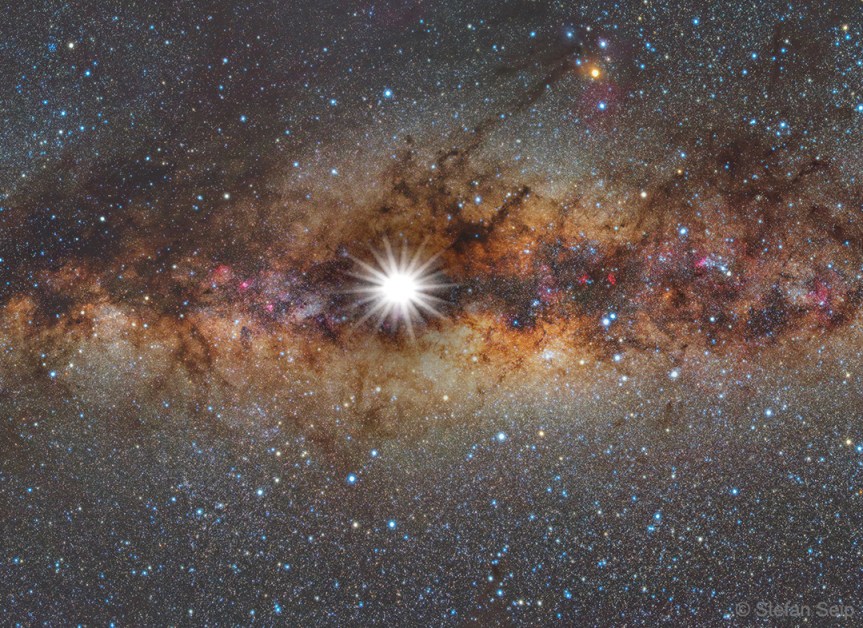
Solstice Sun and Milky Way

Composite Image Credit & CopyrightStefan Seip (TWAN)

Explanation: Welcome to December’s solstice, first day of winter in the north and summer for the southern hemisphere. Astronomical markers of the seasons, solstice and equinox dates are based on the Sun’s place in its annual journey along the ecliptic, through planet Earth’s sky. At this solstice, the Sun reaches its maximum southern declination of -23.5 degrees today at 15:59 UTC, while its right ascension coordinate on the celestial sphere is 18 hours. That puts the Sun in the constellation Sagittarius in a direction near the center of our Milky Way galaxy. In fact, if you could see today’s Solstice Sun against faint background stars and nebulae (that’s really hard to do, especially in the daytime …) your view might look something like this composited panorama. To make it, images of our fair galaxy were taken under dark Namibian night skies, then stitched together in a panoramic view. From a snapshot made on 2015 December 21, the Sun was digitally overlayed as a brilliant star at today’s northern winter solstice position, close to the center of the Milky Way.


Discovery + Outreach: Graduate student research position open for APOD

Astronomy Picture of the Day

Discover the cosmos! Each day a different image or photograph of our fascinating universe is featured, along with a brief explanation written by a professional astronomer.

2021 December 19

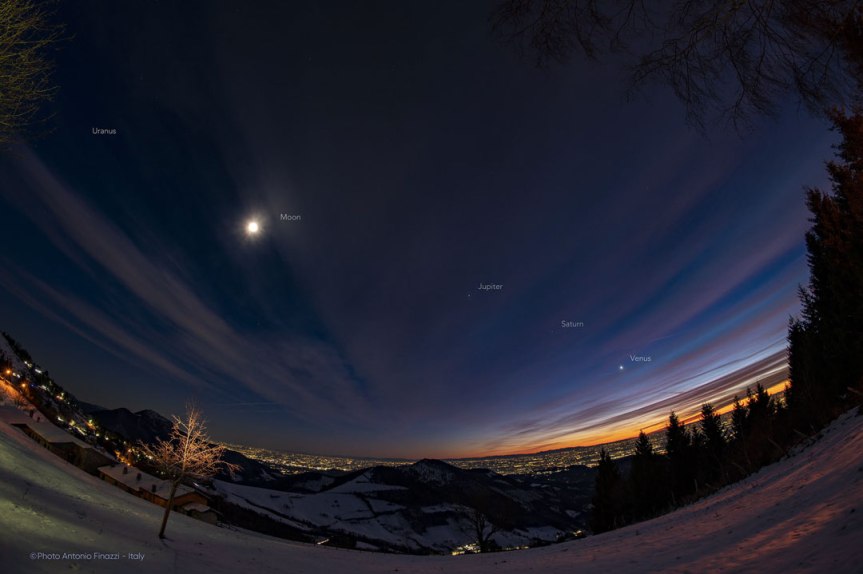
Planetary Alignment over Italy

Image Credit & Copyright: Antonio Finazzi

Explanation: It is not a coincidence that planets line up. That’s because all of the planets orbit the Sun in (nearly) a single sheet called the plane of the ecliptic. When viewed from inside that plane — as Earth dwellers are likely to do — the planets all appear confined to a single band. It is a coincidence, though, when three of the brightest planets all appear in nearly the same direction. Such a coincidence was captured earlier this month. Featured above (right to left), VenusSaturn, and Jupiter were all imaged together in a line just after sunset, from the San Fermo HillsBergamoItaly. Joining the alignment are Earth’s Moon, and the position of the more distant Uranus. Bands of clouds streak across the sky toward the setting Sun. As Comet Leonard fades, this planetary alignment — absent the Moon — should persist for the rest of the month.


Discovery + Outreach: Graduate student research position open for APOD

Astronomy Picture of the Day

Discover the cosmos! Each day a different image or photograph of our fascinating universe is featured, along with a brief explanation written by a professional astronomer.

2021 December 14

HH 666: Carina Dust Pillar with Jet

Image Credit: NASAESAHubbleProcessing & Copyright: Mehmet Hakan Özsaraç

Explanation: To some, it may look like a beehive. In reality, the featured image from the Hubble Space Telescope captures a cosmic pillar of dust, over two-light years long, inside of which is Herbig-Haro 666 — a young star emitting powerful jets. The structure lies within one of our galaxy’s largest star forming regions, the Carina Nebula, shining in southern skies at a distance of about 7,500 light-years. The pillar‘s layered outline are shaped by the winds and radiation of Carina’s young, hot, massive stars, some of which are still forming inside the nebula. A dust-penetrating view in infrared light better shows the two, narrow, energetic jets blasting outward from a still hidden infant star.


Open Science: Browse 2,600+ codes in the Astrophysics Source Code Library

Astronomy Picture of the Day

Discover the cosmos! Each day a different image or photograph of our fascinating universe is featured, along with a brief explanation written by a professional astronomer.

2021 December 13

Meteors and Auroras over Iceland

Image Credit & Copyright: James Boardman-WoodendAnnotation: Judy Schmidt

Explanation: What’s going on behind that mountain? Quite a bit. First of all, the mountain itself, named Kirkjufell, is quite old and located in western Iceland near the town of Grundarfjörður. In front of the steeply-sloped structure lies a fjord that had just begun to freeze when the above image was taken — in mid-December of 2012. Although quite faint to the unaided eye, the beautiful colors of background aurorae became quite apparent on the 25-second exposure. What makes this image of particular note, though, is that it also captures streaks from the Geminids meteor shower — meteors that might not have been evident were the aurora much brighter. Far in the distance, on the left, is the band of our Milky Way Galaxy, while stars from our local part of the Milky Way appear spread across the background. Tonight the Geminids meteor shower peaks again and may well provide sky enthusiasts with their own memorable visual experiences.

Astronomy Picture of the Day

Discover the cosmos! Each day a different image or photograph of our fascinating universe is featured, along with a brief explanation written by a professional astronomer.

2021 December 12

Comet Leonard Before Star Cluster M3

Image Credit & Copyright: Dan Bartlett

Explanation: Comet Leonard is now visible to the unaided eye — but just barely. Passing nearest to the Earth today, the comet is best seen this week soon after sunset, toward the west, low on the horizon. Currently best visible in the north, by late December the comet will best be seen from south of Earth’s equator. The featured image of Comet C/2021 A1 (Leonard) was taken a week ago from CaliforniaUSA. The deep exposure shows in great detail the comet’s green gas coma and developing dust tail. The comet — across our inner Solar System and only light-minutes away — was captured passing nearly in front of globular star cluster M3. In contrast, M3 is about 35,000 light-years away. In a week, Comet Leonard will pass unusually close to Venus, but will continue on and be at its closest to the Sun in early January.


Tomorrow’s picture: meteor mountain

Astronomy Picture of the Day

Discover the cosmos! Each day a different image or photograph of our fascinating universe is featured, along with a brief explanation written by a professional astronomer.

2021 December 10

Eclipse on a Polar Day

Image Credit & Copyright: Stephanie Ziyi Ye

Explanation: During polar day, in Arctic and Antarctic summer, the Sun stays above the horizon for periods of 24 hours or more. Recorded on December 4, this fisheye timelapse image tracks the Sun in multiple frames as it completes a circle in the summer sky above Union Glacier, Antarctica. Of course on that date, Union Glacier’s sky did grow dark even though the Sun was above the horizon. Captured during the brief period of totality, an eclipsed Sun is at bottom center of the composite view. Near the edge of the total eclipse path across planet Earth, the Moon’s shadow darkens the sky above.

Astronomy Picture of the Day

Discover the cosmos! Each day a different image or photograph of our fascinating universe is featured, along with a brief explanation written by a professional astronomer.

2021 December 8

Comet Hale-Bopp Over Val Parola Pass

Image Credit & Copyright: A. Dimai, (Col Druscie Obs.), AAC

Explanation: Comet Hale-Bopp, the Great Comet of 1997, became much brighter than any surrounding stars. It was seen even over bright city lights. Away from city lights, however, it put on quite a spectacular show. Here Comet Hale-Bopp was photographed above Val Parola Pass in the Dolomite mountains surrounding Cortina d’AmpezzoItalyComet Hale-Bopp‘s blue ion tail, consisting of ions from the comet’s nucleus, is pushed out by the solar wind. The white dust tail is composed of larger particles of dust from the nucleus driven by the pressure of sunlight, that orbit behind the comet. Comet Hale-Bopp (C/1995 O1) remained visible to the unaided eye for 18 months — longer than any other comet in recorded history. The large comet is next expected to return around the year 4385. This month, Comet Leonard is brightening and may soon become visible to the unaided eye.

Astronomy Picture of the Day

Discover the cosmos! Each day a different image or photograph of our fascinating universe is featured, along with a brief explanation written by a professional astronomer.

2021 December 7

Ninety Gravitational Wave Spectrograms and Counting

Image Credit: NSFLIGOVIRGOKAGRAGeorgia TechVanderbilt U.Graphic Sudarshan Ghonge & Karan Jani

Explanation: Every time two massive black holes collide, a loud chirping sound is broadcast out into the universe in gravitational waves. Humanity has only had the technology to hear these unusual chirps for the past seven years, but since then we have heard about 90 — during the first three observing runs. Featured above are the spectrograms — plots of gravitational-wave frequency versus time — of these 90 as detected by the giant detectors of LIGO (in the USA), VIRGO (in Europe), and KAGRA (in Japan). The more energy received on Earth from a collision, the brighter it appears on the graphic. Among many science firsts, these gravitational-radiation chirps are giving humanity an unprecedented inventory of black holes and neutron stars, and a new way to measure the expansion rate of our universe. A fourth gravitational wave observing run with increased sensitivity is currently planned to begin in 2022 December.

Astronomy Picture of the Day

Discover the cosmos! Each day a different image or photograph of our fascinating universe is featured, along with a brief explanation written by a professional astronomer.

2021 December 3

Comet Leonard and the Whale Galaxy

Image Credit & Copyright: Gregg Ruppel

Explanation: Sweeping through northern predawn skies, on November 24 Comet Leonard (C/2021 A1) was caught between two galaxies in this composite telescopic image. Sporting a greenish coma the comet’s dusty tail seems to harpoon the heart of NGC 4631 (top) also known as the Whale Galaxy. Of course NGC 4631 and NGC 4656 (bottom, aka the Hockey Stick) are background galaxies some 25 million light-years away. On that date the comet was about 6 light-minutes from our fair planet. Its closest approach to Earth (and even closer approach to Venus) still to come, Comet Leonard will grow brighter in December. Already a good object for binoculars and small telescopes, this comet will likely not return to the inner Solar System. Its perihelion, or closest approach to the Sun, will be on January 3, 2022.