
The Pagan Book of Days for Monday, August 22nd
Odin’s Ordeal (6)/Aedesia
The fifth century Neoplatonic philosopher Aedesia is remembered today.
Source
The Pagan Book of Days
Nigel Pennick
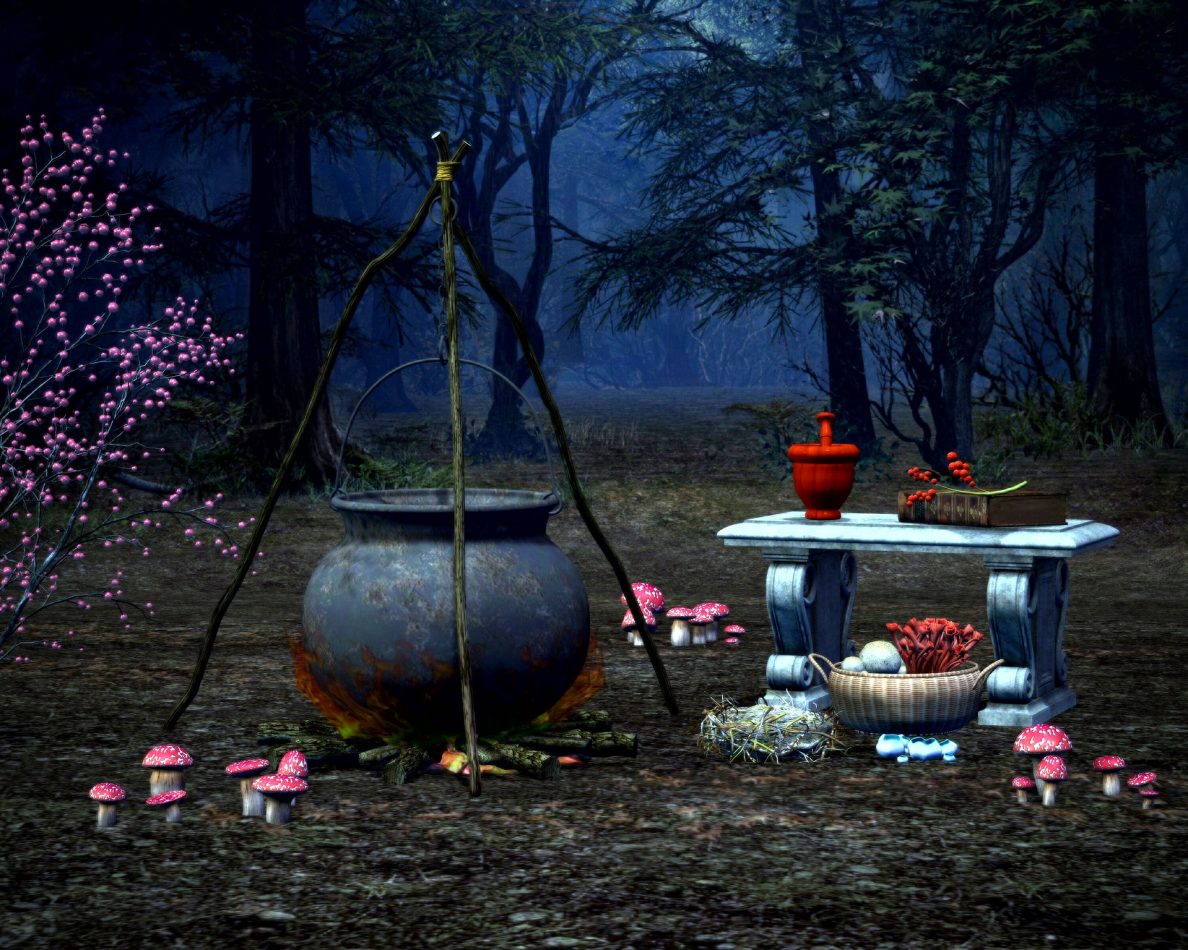
The fifth century Neoplatonic philosopher Aedesia is remembered today.
The Pagan Book of Days
Nigel Pennick

Monday is the sacred day of the moon, personified as the goddesses Selene, Luna, and Mani. The moon is ruler of flow, affecting the changeable and impressionable aspects of people. If a full moon falls on a Monday, then the powers of the moon are at their most potent.
Deity: Mani
Zodiac Sign: Cancer
Planet: Moon
Tree: Willow
Herb: Chickweed
Stone: Agate
Animal: Crab
Element: Water
Color: Green
Rune: Lagu (L)
Celtic Tree Month of Coll (Hazel) – August 4 – September 1
The Runic Half Month of As (August 13 – August 28)
Goddess of the Month of Hesperis – August 9 – September 5
The Pagan Book of Days
Nigel Pennick

Spirituality
Astral work
Dreams
Psychic talents
Lunar energy
Family
Emotions
Children
Pets
Fertility
Female Energy
Purification
A Spell Crafter’s Compendium
Terri Paajanen

Planets, Pallas, and the Big Dipper will all make wonderful viewing this week.
By Richard Talcott
Monday, August 22
• The constellations Ursa Major the Great Bear and Cassiopeia the Queen lie on opposite sides of the North Celestial Pole, so they pivot around the North Star (Polaris) throughout the course of the night and the year. In late August and early September, these two constellations appear equally high as darkness falls. You can find Ursa Major and its prominent asterism, the Big Dipper, about 30° above the northwestern horizon. Cassiopeia’s familiar W-shape, which currently lies on its side, appears the same height above the northeastern horizon. As the night progresses, Cassiopeia climbs above Polaris while the Big Dipper swings below it.
Tuesday, August 23
• The three evening planets form a pretty isosceles triangle above the western horizon tonight. Jupiter stands highest and lies some 4° from both Mercury and Venus, while the two inner planets appear 6° apart.
• The western twilight vista isn’t the only exciting one happening this evening. As those three planets set, shift your gaze about 25° above the south-southwestern horizon. There you will find fiery Mars flanked by golden Saturn some 4° above it and ruddy Antares 2° below it. The two bright planets form a straight line with the 1st-magnitude star tonight.
Wednesday, August 24
• Last Quarter Moon occurs at 11:41 p.m. EDT. It rises around midnight local daylight time and climbs high in the southeast by the time twilight starts to paint the sky. Earth’s only natural satellite lies next to the Hyades star cluster in the constellation Taurus the Bull.
Thursday, August 25
• Mars passes 4° due south of Saturn today. The Red Planet shines twice as bright as its ringed companion, and the two make a stunning pair with the naked eye and through binoculars. Both are worth examining through a telescope as well. Mars’ sports an orange-red disk that spans 11″ and shows several subtle dark markings. Saturn measures 17″ across while its dramatic ring system stretches 38″ and tilts 26° to our line of sight.
Friday, August 26
• Distant Neptune reaches opposition and peak visibility one week from today, but the view now is essentially the same. The ice giant planet rises during evening twilight and climbs nearly halfway to the zenith in the southern sky by 1:30 a.m. local daylight time. The magnitude 7.8 planet lies in Aquarius, 1.1° southwest of 4th-magnitude Lambda (l) Aquarii. You’ll need binoculars to spy Neptune and a telescope to see its blue-gray disk, which spans 2.4″.
Saturday, August 27
• Venus and Jupiter lie closer to each other today than at any time since May 2000. At their tightest, just 4.2′ separate them. Unfortunately, this happens in late afternoon from North America. By twilight, the two worlds have pulled slightly apart — 5.5′ from the East Coast and 12.1′ from the West Coast. Still, that’s close enough that many people will see the two merge into one. Binoculars will provide spectacular views, clearly splitting the pair and revealing Mercury 5° to their lower left and just above the horizon. Most telescope-eyepiece combinations will show Venus and Jupiter in the same field, with Jupiter spanning 31″ and Venus 11″.
Sunday, August 28
• Evenings this week are great times to explore the constellation Sagittarius the Archer. This star group lies due south and at peak altitude around 9 p.m. local daylight time, just as the last vestiges of twilight fade away. The brightest stars within the constellation form the shape of a teapot — a distinctive asterism once you’ve found it. The central regions of the Milky Way pass through Sagittarius, so it’s always worth exploring the area through binoculars or a telescope.

The Sun
Sun Direction: ↑ 99.04° E
Sun Altitude: 30.66°
Sun Distance: 94.004 million mi
Next Equinox: Sep 22, 2016 9:21 AM (Autumnal)
Sunrise Today: 6:17 AM↑ 75° East
Sunset Today: 7:36 PM↑ 285° West
Length of Daylight: 13 hours, 18 minutes
The Moon
Moon Direction: ↑ 261.18° W
Moon Altitude: 21.25°
Moon Distance: 228155 mi
Next New Moon: Sep 1, 20164:03 AM
Next Full Moon: Sep 16, 20162:05 PM
Next Moonset: Today10:54 AM
Current Moon Phase: Waning Gibbous
Illumination: 78.2%

O ancient ones of heaven, earth and sea,
We chant the coven spell, thus shall it be!
To music of the night-wind blowing free,
We chant the coven spell, thus shall it be!
The owl hoots within the hollow tree,
The black cat runs by night silently,
The toad beneath the stone dwells secretly,
We chant the coven spell, thus shall it be!
To moon that draws the tides of air and sea,
We chant the coven spell, thus shall it be!
To god that bides beneath the greenwood tree,
We chant the coven spell, thus shall it be!
By witches’ garter bound about the knee,
By staff and cauldron and all powers that be,
We will the thing in our minds we see,
We chant the coven spell, thus shall it be!
The Spell is flowing like the sea,
The spell is growing like the tree,
Like flame that burns and blazes free.
We chant the spell, thus shall it be!
We chant the spell, thus shall it be!
We chant the spell, thus shall it be!
IT IS!
“Witchcraft For Tomorrow,” by Doreen Valiente
Originally published on Pagan Library
During the next few weeks, look for an opportunity to try an Open Reading. I recommend a fairly quiet day when you feel at peace with your life and attuned to the moment. It should be a day when you have the time and inclination to step back a little and look at the larger patterns that are influencing you at this time. If a birthday, anniversary or other special occasion happens to fall during this period, use it as the basis for your reading. Follow the procedure described in lesson 10.
An Open Reading is a request for guidance that is not tied to a particular problem. You don’t write a question. You simply give your Inner Guide an opportunity to communicate what you most need to know at a given moment.
For most occasions, the Question Reading is the best type because it zeroes in on the issue that is most important to you. Just as with the telephoto lens of a camera, a question lets you move in to focus more narrowly on a subject, but it also keeps you from seeing the bigger picture. An Open Reading has more scope. It covers your long-term growth and development. It offers a higher level of guidance that embraces the larger patterns that are shaping your everyday experiences.
Open Readings can be quite powerful. I try to use them sparingly to preserve their out-of-the-ordinary quality. Consider them for special occasions, such as: birthdays, anniversaries, ceremonial days, equinoxes and first days (new job, date, trip).
Open Readings are useful when you are standing on the threshold of a new phase, such as after the birth of a child or move to a new house. Open Readings can help you adjust to new or unpredictable situations ahead of time. Whenever an expanse of unknown is opening out before you, that is a perfect time for an Open Reading.
The procedure is basically the same as the one in lesson 8. The few differences are noted here.
I welcome a message of wisdom and open myself to receive the guidance that I most need at this time.
You can narrow the focus a little as long as you avoid specific people and events. If you’re interested in your health, you can add a phrase to that effect:
I welcome a message of wisdom about my health and open myself to receive the guidance that I most need at this time.
Go through today’s newspaper and choose a topic that interests you. Look for one that is intriguing and somewhat controversial. A short-term media event is a good choice because you will get feedback on the situation quickly. Read over the facts that are available, and write a question that covers one aspect of the situation. Do an Other Reading following the procedure described in lesson 9. Write down your interpretation and what you predict the outcome will be.Later, when the situation has resolved somewhat, go over your reading and relate it to what happened. If your interpretation doesn’t seem to fit, look at the cards again to see if you can find something new in them.
Think of a problem that is bothering a close friend, relative or colleague. Choose a person whose concerns are important to you. Write a question about the problem as if you were doing an Other Reading. Deliberately keep yourself out of the question. When you are done, ask yourself these three questions:
If you answered yes to any of these questions, rewrite your original question so that it is centered on you. The goal of this exercise is to help you learn to tell when a problem involves you directly and when it doesn’t.
You can create a troubling set of circumstances for an imaginary person, and then do an Other Reading about it. You can also borrow a situation from the advice columns in the newspapers. These are great resources for problems of all kinds.
You can do a tarot reading that is centered on another person or subject. I call this the Other Reading. An Other Reading is appropriate whenever you are simply curious about someone or something that doesn’t involve you directly. Other Readings are about someone, not for him or her. When a reading is for someone, that person writes the question and you simply help interpret the cards.
Other Readings are fun and informative. They are also a good way to learn the tarot. When you use the cards for yourself, you only get to look at a limited set of problems – your own! Other Readings let you explore much more.
Except for choosing the subject, the procedure for an Other Reading is basically the same as the one in lesson 8. The few differences are noted here.
You may be tempted to do an Other Reading about someone who is close to you – a relative, friend or colleague. In lesson 7 I talk about the importance of focusing on yourself in readings that concern you. Here is a simple test you can take to decide whether an Other Reading is advisable. Ask yourself three questions:
If your answer is yes to any of these questions, you should probably do a reading centered on yourself rather than an Other Reading.You now need to write a question. Follow the suggestions in lesson 7, but write the question about your subject. Focus on the aspect of your subject that interests you. If you are wondering about a politician who is running for president, your question might be:
“What are the factors impacting Mr. or Ms. Candidate’s chances to become the next president?”
You are going to do a Celtic Cross Question Reading from start to finish. Follow the procedure outlined in lesson 8. You will need a question to be answered. You can use the question you wrote in Exercise 7.1 or write a new one. Interpret the cards as best you can using your intuition and the Card and Celtic Cross Sections.You may feel a little at sea this first time – not sure whether or not you’re doing everything right. Remember there is no one correct interpretation. What you see in the cards is right for you by definition, and, no matter what, you will come away with something of value. In future lessons, you will learn some principles of interpretation that will help you feel more confident. At that point, we’ll revisit this reading to see what else you can learn from it.
In this lesson, you will finally learn how to do a full tarot reading for yourself. I describe a simple procedure you can use to explore a personal question. Having a procedure to follow is important in tarot work. When you follow the same steps over and over in a certain way, they help you center yourself in the moment. The details of the steps are not that important; in fact, you can change any of them if you wish. The goal is to maintain a spirit of mindfulness. Doing a reading with loving concentration will make your tarot practice very powerful.Here is the procedure for a Question Tarot Reading.
Your first step is to create a conducive mood. Lesson 6 offers some suggestions on how to set up a pleasing environment. You can try these ideas, if you like. Focus on what will make you feel comfortable and secure.When you are ready, sit down on the floor or at a table leaving some empty space in front of you. You should have your tarot cards and your question written on a piece of paper. (See lesson 7 for how to write a question.) At first, a full reading will probably take at least thirty to forty minutes. Try to arrange your affairs so you won’t be interrupted. With experience, you will be able to shorten this time, if you wish, but it is always better to feel unhurried.
Begin to relax and still your mind. Put aside your worries and concerns for now. (You can always get them back later!) Settle fully into the present moment. Take a few deep breaths, relax all your muscles and feel the quiet as you turn away from the outside world. Take as much time as you need for this calming process.
When you feel centered, take your cards out of their container. Hold them cupped in one hand while you place the other hand on top. Close your eyes and bring the cards into the circle of your energy.Now, make an opening statement, if you wish. Some possibilities are:
You can write a phrase to say every time, or you can speak spontaneously. It is more important to speak from your heart than to mouth an empty formula. Say your statement out loud, as sound adds energy and conviction.Next, ask your question, either from memory or by reading it. Be sure to say your question exactly as you wrote it. One of the mysteries of the unconscious is that it is very literal; the cards you choose will often reflect the precise wording of your question.
Open your eyes and begin shuffling. It is important to shuffle the cards because this is how you sort through all the forms your reading could take and arrange at a subtle level the one you will receive.There are a number of ways to shuffle the cards. Each method has its pros and cons. Choose one that is most comfortable for you. Certain methods mix the cards so some are right side up (upright) and some, upside-down (reversed). If this is your first reading, do not worry about reversed cards. I will explain these in lesson 17.
Concentrate on your question while you shuffle. Focus on the overall intent rather than the details. Don’t strain to stay fixed, but do keep the question in mind as much as you can.
When you feel you have shuffled long enough, stop and place the cards face down in front of you with the short edge closest to you. Cut the deck as follows:
It’s best to regroup the cards in one quick motion. Don’t try to figure out which pile should go where. Just let your hand move where it will. The cut is an important finishing step that marks the end of the card-arranging stage. Once you have regrouped the cards, the pattern of the reading is fixed, and all that remains is to lay out the cards and see what they reveal.
Follow the steps for the spread you have chosen. If this is your first reading, use the Celtic Cross. (Before actually laying out the cards, read the next step, “Responding to the Cards.”)
Pay attention to your reactions to each card as you lay it out. At first, you will not know or remember the usual meaning of a card. Your thoughts and feelings will be based mainly on the images. As you practice, your reactions will become more informed, but also more predictable. Try to keep some of your original openness as much as possible. Pay attention to any responses that seem unusual or out-of-place.When all the cards are laid out, take a moment to respond to them as a whole. Do you get an overall impression? Do you have any new reactions? Jot down some of your thoughts, if you wish. Don’t worry if you can’t remember all of them. Just as with dreams, you will recall the most important. Try not to get too involved in your notes as that can break the flow of the reading. You simply want to capture a few ideas quickly.
In the beginning, use the section about individual cards for help. Later, you can examine the cards on your own, but you may still find this section useful. (I use it myself from time to time!)Begin your review with Position 1 and proceed in position order. Here are the suggested steps:
When you’ve considered each card, look for relationships between them. Apply the principles of interpretation.
You could ponder a reading for hours without running out of insights, but, of course, this isn’t practical or desirable. Do try to spend some time, however. Your reward will be equal to your effort.
At some point, you need to pull everything together. I call this creating the story. Your story will help you understand your situation and give you guidance for the future – what you have been seeking all along.I recommend that you create your story spontaneously. Once you have finished your card review, let that analytical approach go. It’s no longer appropriate. Your story will be more authentic if it arises freely from within. When you feel ready, simply begin speaking your story, saying whatever comes to mind. Use any notes you have to help, but don’t focus on them too much.
I encourage you to tell your story out loud. Writing is too slow, and just thinking your ideas is too vague. Your story will gather strength and power as it is spoken. If you begin to ramble or lose your train of thought, don’t be concerned. Simply pause, regroup and start again. As you practice, you will get better at speaking on the fly. You may want to tape your story. When you play back the tape, you will be amazed at what you hear. You will truly feel you are your own best tarot reader.
Your story is done when your words slow down and stop naturally. Your next step is to distill the main theme of your story. What is the essence of your guidance? Ask yourself these questions:
What you are doing is forming the answer to your question. Before the reading, you posed a question that had meaning for you. Your Inner Guide has responded, and now you want to capture that wisdom in a form you can remember. Try to summarize your story in one or two sentences. Concentrate on the message in the cards and not the mechanics of your interpretation.
The main event is over, but, as with any ceremony, there are a few final steps to take to end your reading and leave your cards ready for next time.If you have not already done so, write down the cards you selected and their positions. It is easy to forget them. Then, clear the deck to remove all traces of the energy patterns of this reading. I clear a deck by scrambling the cards together gently. It reminds me of erasing letters in the sand with a sweep of my hand. You may enjoy this technique as well, but any shuffling method will do. Take a few moments now to clear your deck. Make sure the cards are face down or turned away from you. Stop when you feel you’ve shuffled long enough, and gather the cards together. Your deck is now ready for your next reading.
Before putting the cards away, hold them again for just a moment. Place your deck in one hand with the other hand on top, and close your eyes. Say what you feel you have learned from this reading. Express your gratitude to your Inner Guide for helping you via the tarot cards. Gratitude is a wonderful sentiment. It provides the ideal frame of mind in which to end your reading.
When you began, you initiated a cycle. You created meaning in the form of a reading, and now you have completed that cycle by returning the cards to their resting state.
The reading proper is over, but the inner work is just beginning. Your goal is to integrate what you have learned into your life in some way. If you don’t, your tarot practice will remain a beautiful pastime with no power to help you.Decide on one or more actions you can take to put your guidance to work. You can reinforce what you’re doing now or make some changes, either radical or minor. Specific actions are usually more helpful than vague plans.
If you are keeping a journal, write down what you intend to do. Commit only to what you know you will actually carry out. I know how easy it is to lay out some cards, look at them briefly and then never think about that reading again, especially when your reaction is less than positive!
As the days go by, think about your reading and how it meshes with your life. Ask yourself these questions:
You may be tempted to do another reading, but it’s probably best to wait until there are important changes in your situation. Assume that your first reading covers all you need to know. If you are puzzled about certain elements, mine your first reading for more insights. By going deeper, you will get closer to the heart of the matter.Using what you have learned in a reading is probably the most important step – and the most difficult. It involves moving beyond playing with the cards. When you actually commit to integrating your tarot insights into your life, you have realized the true and lasting benefit to be gained from the cards.
This is my ideal tarot session, but, to be truthful, I don’t always follow it. Sometimes I linger over these steps, sometimes I neglect quite a few of them. I encourage you to adopt whatever procedure suits your interests and needs. If you don’t enjoy the cards, they’ll just gather dust on the shelf. The details aren’t that important; it’s the intention that counts!
Writing practice questions helps you learn to analyze a personal problem quickly and recognize what you want in various situations. Also, if you decide to do a reading about the problem, you have your question ready.
The first step is to review your situation thoroughly. Think about all the people involved, directly or indirectly. Go over your options for the future. Let your mind wander freely. You want to look at your problem without judging or censoring any part. Jot down the ideas that occur to you, but try not to be too systematic. You want to use your intuition, not logical analysis.
Once you have finished your review, you can write your question. Here are some suggestions:
In the first question, the writer gives up her responsibility for making a decision. She wants the cards to tell her what to do. In the second question, she is simply asking the cards to give her more information. She knows the decision lies with her.
It’s tempting to write the first kind of question. We all seek the certainty that we’re making good choices, but the tarot can’t make our decisions for us. Avoid questions that deflect responsibility, such as:
Instead, begin your questions with phrases such as these:
In the first question, the writer is not keeping his options open. He has decided on one solution – having his mother-in-law move out. The second question is more open-ended. It’s OK to narrow the scope of a question as long as you don’t decide on the answer ahead of time. Both of the following are open questions, but the second is more specific:
The first question is unfocused. It doesn’t specify which work area is of interest. The second question is too detailed. It looks at one minor aspect of the problem. The third question is best because it finds the balance between the two. Include only the details necessary to make clear what you want to know.
Sometimes you may not realize you are orienting your question around someone else. Consider these:
The first question focuses totally on Arthur and his problem. In the second question, the writer is included, but his attention is still on Arthur. The third question is best because it is grounded solidly in the writer’s own experience.
In the first questions, the writer feels his position is the correct one – others are not getting with the program! The second questions are more neutral and open-ended.
The first questions have an air of defeat. The second questions are more confident. The writer knows she will be successful given useful advice.
You may be wondering why I have gone into so much detail about writing a question. This process is a focusing exercise that prepares you for the reading that follows. Writing a question usually takes no more than three or four minutes, but, for that small investment in time, you reap big rewards. You understand your situation better and can interpret your reading with more insight.
(See Introduction to Exercises.)
Spend some time thinking about where you will do your tarot readings. Consider some of the suggestions in lesson 6, or use your own ideas. Don’t feel that you have to create a showcase location. Just see what you can do to create a setting that is pleasing and comfortable.
In this exercise, you will be announcing your intent to find or create an object that will be a personal symbol of your tarot practice. You can buy, find or make this object yourself. Once you have it, place it in your tarot spot as an inspiration for your work.Read over the description of the Fool. This card often stands for the feeling of joy and freedom that comes from beginning a new adventure. It is in this spirit that you will seek your object. This quest symbolizes the quest for greater understanding you are undertaking by learning the tarot.
Hold the Fool in your hands, and close your eyes. Announce your desire to find or create a tarot symbol. Commit to working until you have it. The value you place on this quest will reinforce the value of your larger quest. Once you have affirmed your intent, let it go. You will find what you are looking for.
This exercise will strengthen your faith and commitment and leave you with a tangible symbol of your purpose. It will also help you learn that hidden within seemingly foolish acts is the experience of life as an adventure.
The environment of a tarot reading includes the physical setting and your internal state. There are five inner qualities that are beneficial. These are:
Even though these five qualities are important, they are not necessary. You can have a meaningful reading without them, but it may be more difficult. The best way to decide if the time is right for a reading is to look inside. If something feels wrong, postpone the effort, but if your inner sense says go ahead, then all is well.
Besides the inner environment, there is also the setting of a reading to consider. The ideal place is one that elicits feelings of quiet, peace, even reverence. You could do a reading in a crowded airport, but the noise and distractions would make inner attunement difficult. Since you will probably be doing most of your readings at home, let’s look at how you might create a agreeable environment there.
Set aside a place in your home where you will do your readings. By using the same spot over and over, you build up an energy that reinforces your practice. If you meditate or pray, you can do these activities here as well as they harmonize with the tarot in spirit and intent.
Try to create a sense of separateness about your spot. When you use the cards, you want to turn away from the everyday world and go into a space that is outside time and the normal flow of events. A separate room is ideal, but a corner set off by a screen, curtain, pillows or other divider can work too.
Try also to create an atmosphere of beauty and meaning. Place some items nearby that are special to you. Objects from nature, such as shells, stones, crystals, and plants are always appropriate. A talisman, figure or religious icon can help you shift your focus from the mundane to the inspirational. Consider pictures and artwork, especially your own, and appeal to your senses with such items as flowers, incense, candles, textured materials and quiet, meditative music.
These touches are nice, the only thing you really need is a space large enough to lay out the cards. You can use either a table or the floor. There is a grounded feeling to the floor, but, if that position is uncomfortable, a table is better. Choose a table of natural materials such as wood or stone.
If you like, you can cover the table or floor with a cloth to create a uniform area. The material should be natural, such as silk, cotton, wool or linen. Choose the color with care as colors have their own energies. Black, dark blue and purple are good choices. There should be little or no pattern, so the images on the cards stand out from the background.
Store your cards in a container to protect them and contain their energies. Any natural substance is fine, such as wood, stone, shell, or a natural cloth. I know of one woman who sewed herself a silk, drawstring bag and embroidered it with stars, moons and other designs. Consider keeping your cards wrapped in silk cloth when inside their container. Silk has a luxurious feel that will remind you of the value you place on your cards.
Tarot cards pick up the energy and character of those who use them. For this reason, set aside a tarot deck that is just for you, if you can. These cards are going to be your personal tool of communication with your Inner Guide. You want to bond to them closely.
When you do your tarot work in a place of your own, the experience can be quite powerful, but extra preparations are never necessary. All you have to do is use the cards. That’s the important part.
You can become more familiar with each tarot card by concentrating on a different one each day. This exercise takes a minimum of seventy-eight days, so it is quite a commitment, but, if you stick with it, you will know the tarot deck very well when you are done.
Decide now how you will choose your daily card during this learning phase. You can be systematic (first the Wands, then the Cups, etc.) or spontaneous. You can pick a card that catches your eye, or one that seems fitting for the day’s events. A single day on each card is enough, but you can take longer, if you wish.
When you have selected a card, read its information page at least once. Write down the keywords, and try to memorize them. They will help you remember the meanings of a card quickly. Study the details of the card’s picture as well. You may want to make a copy of the information page to refer to during the day. I don’t recommend carrying your card around as it could get lost or damaged. Start a journal, if you wish.
When you have studied all the tarot cards at least once, begin drawing your cards without conscious deliberation. Follow the steps listed in lesson 5. Continue to make entries in your journal, if you have one. After a month or so, calculate the distribution of suits and major arcana cards. Do you notice a pattern that reflects your situation? Do certain card(s) show up frequently? Ask yourself why this might be so.
You are now ready to begin putting your tarot knowledge to work. Lesson 5 describes the Daily Reading. In this reading, you select a single card that becomes your theme for the day. The purpose is to heighten your awareness of one approach to life for a single twenty-four-hour period. It also helps you learn the tarot without strain or tedium.
![[picture of Two of Cups]](https://i0.wp.com/www.learntarot.com/c2s.gif) Let’s say you have drawn the Two of Cups for a daily reading. As you go through the day, you will watch for signs of this card’s special energy. The keywords for the Two of Cups card are connection, truce and attraction. In the morning, you notice that a colleague, who has been rather hostile, comes to your office to talk. You sense a truce, and you take advantage of it. In the afternoon, while working on a problem, you look for the connection between two approaches and find your solution. Later, at a party, you talk to someone who attracts you. On each occasion, you access the energy of the Two of Cups and allow it to guide your decisions.
Let’s say you have drawn the Two of Cups for a daily reading. As you go through the day, you will watch for signs of this card’s special energy. The keywords for the Two of Cups card are connection, truce and attraction. In the morning, you notice that a colleague, who has been rather hostile, comes to your office to talk. You sense a truce, and you take advantage of it. In the afternoon, while working on a problem, you look for the connection between two approaches and find your solution. Later, at a party, you talk to someone who attracts you. On each occasion, you access the energy of the Two of Cups and allow it to guide your decisions.
At first, you may want to choose your daily card deliberately so you can avoid repeat selections and learn the deck more quickly. (See exercise 5.1.) If you prefer, you can choose your card without conscious intervention. (See exercise 5.2.) Here is the procedure:
This procedure is easy to do on a daily basis, and it gives you an opportunity to connect with your Inner Guide regularly. Choose a time that works for you. Mornings are good because you can pick a card during your wake-up routine. You can also select one at night. You will be ready to put your card to use as soon as you wake up. It isn’t necessary to pick one time since your schedule may change. The main goal is to make the Daily Reading a part of your day so that your tarot work progresses.
Keep a journal of your selections. Later, you will find it interesting to trace the pattern of your choices. I started studying the tarot in earnest when I was spending my days caring for my two boys, then under five. One day I calculated the distribution of my daily cards to that point and found the following:
How clearly this describes my life at that time – heavy on the real world (Pentacles) and basic forces (major arcana) and not so heavy on individual creativity (Wands).
In your journal, jot down a few highlights of the day next to your entry. This will help you correlate the cards with your moods and activities; but keep it simple, or you will soon tire of the effort.
I wrote my journal entries using five pens of different colors – one for each category:
Color coding helps you see at a glance the shifting tarot patterns of your weeks and months.
You will probably be surprised to find that you draw certain cards over and over. Of the fifty-seven Pentacles I recorded early on, I drew the Ace and Queen eleven times each! At home with my children, so many of my days reflected the themes of these two cards. The Queen of Pentacles is the ultimate nurturing mother. The Ace of Pentacles offers opportunities to enjoy the material side of life, and it doesn’t get more material than cleaning dirty diapers!
I picked these two cards so often that I became suspicious about them. I examined them closely one day to see if I had damaged them in such a way that I would be more likely to select them. They appeared no different from the others. I was simply drawn to them because they expressed my situation at that time. The cards you select frequently will also tell you about your concerns.
The most important step in learning the tarot is to take the cards out of the box regularly. The Daily Reading is the ideal solution. If you do one each day, you will absorb the character of each card quickly and easily.
Spend a few minutes looking at the Celtic Cross Section so you understand how it is set up. Don’t worry about memorizing anything. The goal is simply to get comfortable with the information.
Now, lay out ten cards of your choice using this spread. Read the page for each position one by one. Think about the meaning each card takes on because it falls in a certain position. You will learn more about this later, but just speculate for now.
You can design spreads yourself to suit your needs. Create for yourself now a three-card tarot spread. Follow these steps:
![[picture of 3-card time spread]](https://i0.wp.com/www.learntarot.com/exer41.gif) This is a basic three-card spread that covers events in time.
This is a basic three-card spread that covers events in time.
![[picture of 3-person team spread]](https://i0.wp.com/www.learntarot.com/exer42.gif) Here’s a spread to use when you belong to a three-person team and want to know the expectations of the members (including yourself). The cards form a “Y” with the tops facing inward. This pattern suggests a meeting of the minds.
Here’s a spread to use when you belong to a three-person team and want to know the expectations of the members (including yourself). The cards form a “Y” with the tops facing inward. This pattern suggests a meeting of the minds.
Design your layout so it reflects the meanings of the positions. To expand on this exercise, work with four, five or more cards.
A spread is a preset pattern for laying out the tarot cards. It defines how many cards to use, where each one goes, and what each one means. A spread is a template guiding the placement of the cards so they can shed light on a given topic. It is within this template that the meanings of the cards come together so beautifully.
![[picture of Four of Pentacles]](https://i0.wp.com/www.learntarot.com/p4s.gif) The most important feature of a spread is the fact that each position has a unique meaning that colors the interpretation of whatever card falls in that spot. For example, the Four of Pentacles stands for possessiveness, control, and blocked change. If this card were to fall in Position 4 of the Celtic Cross Spread (the “Past” position), you would look at how these qualities are moving out of your life. In Position 6 (the “Future”), you would instead view them as coming into your life – a quite different interpretation.
The most important feature of a spread is the fact that each position has a unique meaning that colors the interpretation of whatever card falls in that spot. For example, the Four of Pentacles stands for possessiveness, control, and blocked change. If this card were to fall in Position 4 of the Celtic Cross Spread (the “Past” position), you would look at how these qualities are moving out of your life. In Position 6 (the “Future”), you would instead view them as coming into your life – a quite different interpretation.
Tarot spreads can be any size or pattern. Rahdue’s Wheel includes all 78 cards and creates a vast tableau of one person’s life. A spread can also contain just one card. In lesson 5 I show how a one-card spread is useful for daily readings.
Most spreads contain between six and fifteen cards. This range is small enough to be manageable, but large enough to cover a topic in some depth. The pattern of a spread often forms a design that reflects its theme. For example, the Horoscope Spread is in the shape of the traditional circle that forms a person’s birth chart. The twelve cards of this spread correspond to the twelve houses of astrology.
When cards are related to each other in a spread, an entirely new level of meaning is created. Combinations appear, and a story line develops with characters, plots and themes. The weaving of a story from the cards in a spread is the most exciting and creative aspect of a tarot reading. It is an art, but there are many guidelines you can follow. I discuss these in later lessons and give examples of the story-making process.
In these lessons, I refer to just the Celtic Cross Spread. I think you will be able to concentrate more on developing your intuition if you stick to just one spread at first. Once you know the cards well and feel comfortable reading them, you can expand your tarot practice by exploring other layouts. Before you continue with the lessons, read over the Celtic Cross Section. (See exercise 4.1.) We’ll be using this spread throughout the course.


You must be logged in to post a comment.