

Category: Daily Posts
Your Daily Rune for Tuesday, June 26th is Wunjo

Psychic Tip of the Day
Psychic Tip of the Day

MONEY VISION
Today is the best day of the year to pursue a financial goal. Your love life takes a back seat to materialism, although it could assist your romances in the future. Have you made an investment in love?
Tarot.com is Part of the Daily Insight Group ©2018
Your Ancient Symbol Card for June 26 is The Peacock
Your Ancient Symbol Card for Today

The Peacock
The iridescent emerald plumage and spectacular broad tail of The Peacock make it the ideal symbol of both justified pride and vanity. It denotes the right for one to be proud of themselves for being who they are and for letting others know. In short, its okay to strut a bit. At the same time The Peacock reminds us that while pride and high self esteem are essential components of a healthy psyche, becoming too full of one’s self makes us vain, and vanity is never attractive in anyone.
As a daily card, The Peacock is reminder that you are inherently valuable, and have a right to be proud of who you are as well as let others know you are proud of yourself. It is also a warning to not allow you pride and sense of self worth grow to such grand proportions that you become vain and conceited.
Shuffling the Cards, Your Tree of Life Spread Given On June 26
Your Tree of Life Spread Given on June 26th
This reading gives you an insight into your true self. It reveals aspects that you might not be aware of in your life.
Your Highest Ideals
 Five of Cups
That which was expected to bring joy may bring sorrow. Disillusionment with relationships. The loss of friends, partners and lovers.
Your Creative Power
 Amore
Amore
Amore reversed signifies bonds may be broken and fights and betrayals are likely. Tread carefully. Beware of bad choices and lingering too long in relationships that harm you.
Your Wisdom
 The Devil
This card represents the dark forces in the world, misuse of power, depression and addiction to the material world. Beware of The Devil in you and do not allow him to gain control.
Your Virtues
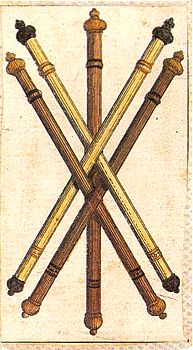 Five of Wands Reversed
Obstacles to success will be overcome. New ventures are on the horizon.
Your Health, Beauty and Altruism
 Strength
With Strength comes victory and success in our world. Power and inner energy are well used. Moral fortitude comes to the forefront. All virtues may be realized.
Your Crowley Thoth Tarot Card for June 26th is The Sun
Your Crowley Thoth Tarot Card for Today

The Sun
Only The Universe card of the Crowley Tarot can match the blessings that come with The Sun. While it certainly doesn’t promise a life’s path without some bumps in the road, The Sun indicates all will be well. The Sun is our Cosmic Nurturer. Life flourishes under its radiant beams. It provides the illumination to find Truths and lights one’s path so they do not get lost. To stand in the rays of The Sun is to shine. To absorb its energy promotes growth, exceptional physical and mental health, and good fortune. The Sun is empowering, elevating and fills those who bask in it with confidence and sense of self-worth.
Learn the Tarot: The Queen of Wands
Queen of Wands
Decisiveness and a willingness to lead produce tangible rewards.
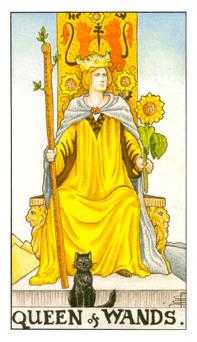
General Meaning
This suit, most often called “Wands” and sometimes called “Rods” or “Staves,” represents initiative, ambition, drive and desire. This is the suit of enterprise and risk-taking.
Traditionally, representing the energy of a Queen, this woman represents the natural manager, whose gift is to inspire teamwork and divvy up tasks. She is the one who sees ensures everything runs smoothly. She’ll be sweating in the sun along with her family or crew, inspiring everybody to keep up and supporting morale with her infectious energy.
She is the best kind of manager to have, because she is like a challenging but encouraging mother, who knows you have it in you. She believes in her charges and they work hard to please her. She is not, however, sentimental. Like a good farmer, she views her crops, her animals, even the people who work for her, as necessary resources for the achievement of the higher goal. If any aspect is no longer productive or cost-effective, she can let them go without a second thought. Do not look to her for sympathy.
In the Advice Position
Realize you are not in the leadership role right now. Concentrate on a more supportive role that promotes the overall objectives.
The card in the Advice position suggests a course of action which will harmonize what you want with what is currently possible.
The Queen of Wands in this position reveals a need to hold your place in the chain of command and respect the hierarchy (at least for now). This may not be a time for you to be at the helm, even if you are motivated by a strong dedication to completing a project or overcoming a challenge.
A perceived deficiency in leadership may make you want to take hold of the reins, but don’t do it! Restrain yourself and remain loyal to your higher-ups. Stay focused and energetic. Enthusiastically confront the challenges directly in front of you. Perform in good faith and encourage others to do the same.
Tarot.com is Part of the Daily Insight Group ©2018
Tarot.co is
This Week’s Tarot Card Reading for June 25 – 30: Eight of Wands
This Week’s Tarot Card Reading: Eight of Wands
Your weekly Tarot card advice for June 25-30, 2018
Get ready for a huge jolt of energy, as this week’s card, the Eight of Wands, brings rapid progress! Remaining doubts and impediments are cleared away, and you are able to leap forward with your plans. How might this manifest in your life? On the career front, this could come 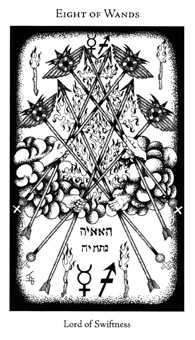 in the form of a promotion, acceptance of a submission or proposal, or any opportunity to have your ideas/work be seen by others. In relationships, this could mean taking the next step in intimacy with someone you care about, allowing your love to grow and expand into the future.
Keep in mind that leaps like this don’t usually happen unless you’ve put a plan into place already. If you’re not seeing the kind of progress you’d like, maybe you haven’t done enough preparation or haven’t attempted the refinement that the previous cards this month suggested. Maybe you’ve been too afraid of taking risks. Use the energy of the Eight of Wands this week to re-evaluate and lay the groundwork for a leap ahead.
Looking ahead
This month has been about recognizing your greater purpose and gathering the confidence and personal power needed to devote yourself to it. What a powerful assortment of cards, with three out of five pulled (Judgement, Emperor, Eight of Wands) tied to the drive and passion of the element of Fire! If you harness that energy, you can follow your new mission into a focused, successful life. As you leap ahead in this time of great momentum, keep a tether to who you are and where you came from. Use these points to steer by as you move through the rest of this month and beyond. You’ve made excellent progress so far learning how to navigate with honesty and continued clarity, and next month’s card, the Hanged Man, will strengthen your ability to know what’s right for you. A shift in perception will allow you to release past patterns and assumptions, continuing vital personal growth.
Tarot.com is Part of the Daily Insight Group ©2018
Your Daily Tarot Card for Tuesday, June 26th is
Tarot Card of the Day
Three of Cups
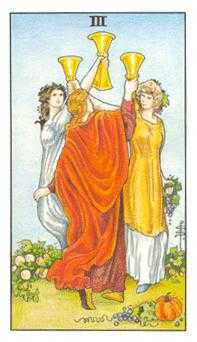
The Three of this suit is often entitled Consent, or simply Yes. This card resonates with a spirit of agreement, mutual support, encouragement and teamwork.
Often pictured as three women celebrating their connectedness in a dance with lifted cups, it could also be called “sisterhood,” a real mutual admiration society. It points to all the benefits of harmonious relationship.
Tarot.com is Part of the Daily Insight Group ©2018
If You Were Born Today, June 26

If You Were Born Today, June 26
You are wonderful at organizing and directing, but you are not afraid of hard work either. In fact, your success generally comes from your own efforts. You may need to make a conscious attempt not to live in the past, as this tendency is very strong and can sometimes keep you from moving forward. You have a strong idealistic streak that can lead to a colorful romantic life, but also quite emotional. Famous people born today: Pearl S. Buck, Peter Lorre, Chris O’Donnell, Ariana Grande, Nick Offerman, Aubrey Plaza, Sean Hayes.
Your Birthday Year Forecast:
Saturn forms an opposition to your Sun until October (since February). Saturn calls upon you to identify the weaker areas of your life and to fix or strengthen them. Take the time to sort out details, improve your work, and become more efficient. Taking a slow and steady approach to life is necessary during this period. Pushing too hard will likely lead to frustration and setbacks. Take it easy and work on self-improvement. Results are not immediate, but will eventually come and bring healthy rewards. Relationships may be (or seem) more challenging than usual while Saturn opposes your Sun.
You have Uranus transiting in harmony to your Sun from May 2019 forward helping you along, and exciting (not jarring) changes and new interests are likely. It’s easier than usual to express your unique individuality, and if this involves changing careers or jobs, a new love affair, or an entirely new hobby, it’s something that takes you forward into unexplored territory. You are more willing to adapt to new circumstances, ideas, and unfamiliar situations during this period. It’s a good time to join organizations and groups and to attend meetings or social events. You are able to find creative solutions to problems now. Flexibility is the key to success under this influence.
You might often get frustrated if results of your actions are not instant, but it’s best to cultivate some patience when it comes to realizing your goals. As well, if you are not getting the results you crave, consider that you might be aiming too high or too wide.
Venus in hard aspect to Jupiter in your Solar Return chart brings love and romance into your life, but you could encounter problems due to overblown expectations or excessive behavior. You may overindulge and would do well to strike a balance between pleasures and the obligations of daily life.
Your affections are strongly stimulated this birthday year, and you are more acutely aware of your powers of attraction. You can enjoy an increase in personal magnetism, but be wary of competitiveness or tension in existing love relationships, as your passions are ignited in general, whether they’re feelings of love or anger! Incompatibilities are emphasized in relationships this year, and this can be stimulating on the one hand, and tense on the other. Watch also for impulse buys during this period.
If there are health issues this year, look for blockages or constrictions since Saturn is involved with the Node.
Idealistic and humanitarian goals or impulses surface this year. Making connections with others from different backgrounds may figure strongly. Widening your mind through unusual or different experiences can be part of the picture. You more easily make personal sacrifices for what you believe to be the greater good this year.
You’re firming up some areas of your life until October, and this can be a period of harder work and discipline and perhaps some challenges. However, as the year advances, you’re sure to feel freer and attract more positivity into your life. Some relationships may be feisty or complicated and there can be a significant break in your social life, but improvements are possible. With work, you’re expanding your interests in satisfying ways.
2018 is a Number Seven year for you. Ruled by Neptune. This is a year of preparation, chance, and refinement. It is not a time of dramatic changes. Instead, it’s a year when reflection on the past is helpful, and when refinements to your life path should be made. It’s a good year to study and analyze. Unexpected twists to your life story and “chance” meetings are probable. Advice – take stock of your life in order to prepare for more exciting years to come, examine the past and plan for the future, get in touch with your deepest needs and uncover your personal power, don’t strain yourself or actively try to expand.
2019 will be a Number Eight year for you. Ruled by Saturn. This is a year of power and accomplishment. Actively seeking to expand, taking educated risks, and moving forward are highlighted. This is a year of opportunity, particularly in the material and business world, and opportunities need to be seized. It’s generally not a year to find a new love partner, simply because the focus is on the material world and your place in the world. This is a problem-solving year in which you can expect real, tangible results. Advice – take action, plan ahead, seize opportunities.
Well We Didn’t Get Blown Away But I Did When I Saw What Happened While We Were Off The Net….

I am speechless. I honestly don’t know what to say. How do you thank someone for saving your life? How do you? From the time I made our first post and had to get off the internet because of the tornado warning, the money came in to purchase the medicine I need to survive. I have always prided myself on being rather calm, laid back and sort of hard hearted. My experiences over the years had made me that way. I would still like to think I am calm and laid back but not heart hearted anymore. You have changed that so very much. When I opened our PayPal account, I couldn’t believe my eyes. I had to take a second look. Then this old witch (I ain’t that old, now) broke down and cried. I have met a lot of people over the years. I don’t believe any of them have ever shown me the love and caring you all have. Most of them want to befriended me then stab me in the back. None of them were friends. In fact, I never really started to know the meaning of friendship till we came here. I have met so many wonderful, loving individuals at this site. You are caring and compassionate and I believe you love to make me cry. There is no way I can ever thank you for what you have done for me this time, you saved my life, literally.
When I opened the PayPal account, I started sobbing. Eleanor and Lynette thought that there was something else wrong with me until they saw what I was looking at. They started crying also. In fact, we all have been crying. You can’t imagine what it is like to be at the edge, thinking your days are numbered and then suddenly being pulled back. It is breath-taking. You have to stop and pinch yourself to make sure it is real. And, oh yes, it is very real. Thank you, thank you, thank you so very much. The feelings I have right now for you are indescribable. I wish I could come to everyone of your houses and give you a great big hug, kiss and tell you, “I love you” in person. Unfortunately, I can’t do that. But I want you to know I love you and I always will. You are my family and what a family you are. I have never been so proud and honored to call anyone brothers, sisters and family as I have all of you.
I guess I clean out that chatroom now and we have that celebration of life and blessing ritual, what’cha say? First though, I would like to honor those who helped me in my most darkest hour. Say a prayer for them, ask the Goddess to bless them and also thank the Goddess they were given the hearts and compassion they have. Know you will always have a very special place in my heart and if there is anything, and I mean anything I can do for you do not hesitate to ask. That’s what family is for.
Lady Beltane
Pam
Jeff
William
Roman
Theresa
Barbara
Heather
Maria
Heather
I didn’t put your last name because of security reason especially since I am the one preaching about security but you know who you are. Thank you so very much. I would also like to thank those who sent prayers, blessings, healing energy and lite candles for me. I don’t know your name, I wish I did. Because it seems like it takes a village to heal a witch these days, lol! I should mention Lynette just flew out of here with the prescription to get the medicine. Pfizer told Eleanor it would take about 3 to 4 weeks to get me on their program. So it looks like you are stuck with me for a bit longer. Thank the Goddess and each of you!
I will be announcing when we are going to have our ritual and celebration. I have to check with Lady Beltane and make sure it doesn’t interfere with any of her plans. Then I will let you know. What a night it will be! Praise the Goddess!
I love you,
Lady A
Good Tuesday Morning To All My Precious Family & Friends! May the Goddess Bless You & Yours Today & Always!

Good Tuesday Morning, my sweets! How are you doing today? Up and ready to kick the world in the rump? I will make this short I promise, I know once I get going I don’t have sense enough to hush. I might get hushed before I am ready to quit talking. We have some severe thunderstorms rolling through here again. I believe it has rained 40 days and 40 nights or at least it seems that way. About ready to build the witch’s version of Noah’s Ark, lol! Seriously though, I don’t know if it is the other medication I am on or what but I read Lady Beltane’s post this morning and cried. I got to wondering why does it take facing your own mortality to realize what wonderful friends you have surrounding you and what you have truly been blessed with. The out pouring of love for me in the past few months has been unbelievable. Maybe I have been put in this situation so my eyes will be opened to the many blessings I do have in my life. They say there is a reason for everything, maybe there truly is. Lady Beltane is truly an amazing person. No, amazing isn’t the right word for her, she is a very warm, caring individual who I now know loves me very much. I believe she loves me more than the individuals that are around me on a daily basis(well except for my two sons). She has touched my life in many ways, now to plead for it, made me cry. Thank you Lady B, I do love you, sis.
I do have good news. I am now sitting $175 away from getting the medicine I need to survive. I know Lady B explained to you how the program works so I won’t go into details about it. But I have did a lot of thinking this morning. I have thought back to the wonderful people who have given so freely of themselves so I can survive. At first I honestly didn’t think I would but now I know I am. It is thanks to all of you that my thinking has changed. Love can do so much. It can heal a broken heart, it can provide you comfort and most of all it can give you hope. I didn’t have hope when I came out of the hospital but thanks to you and the love you have shown me, I do now. I was thinking that when the goal to get my medicine is reached what if we have a celebration of life and a blessing ritual for all of you. It is the least I can do for you. We can have it in our old chatroom. I feel it in my soul that I am going to have something to celebrate and I want to celebrate it with each of you. I haven’t told anyone because of all the other issues that keep popping up but I actually when ahead and finished my High Priestess training. I started it when I was still in the mountains and just recently finished it. The Elders have been after me for years to finish it so I did. I want to share my new talents, my new life you have given me and my love with you. I can’t wait. I was thinking what a joyous occasion it would be. I might be putting the cart before the horse but I don’t think so. I want us to have that celebration and I want you to receive a special blessing for all you have done for me. You have enriched my life so and most of all you will be giving me life itself. Just something to mull over because you have done so much for me, I want to do something for you.
Now for the next topic at hand, as you have probably noticed we have been doing the postings two different ways. One way, we run the posts individually giving you the opportunity to comment on them and reblog them. The other way, is the daily digest or journal, rather cramp as far as information goes but…..I want to know which way you prefer. Today we are going to do the posts individually, tomorrow the digest style. I am going to post a poll and I want you to tell us which way you want the daily posts delivered to you. Personally I like the individual ones because you can comment on them and we can communicate back and forth but I will leave the decision up to you. After today’s posts, look for the poll and also tomorrow. When we get the results, we will deliver the daily posts the way you want them.
Well like I said I might get cut off by the weather. Tornado warning was just issued and the sky looks awful. Got to get to the basement. So I am not proofreading this. Think over what I said and when the storm is over, hopefully we will be back and not in Kansas, lol!
Love ya,
Lady A
Good Monday Morning Brothers & Sisters of the Craft!
Good Monday Morning to all our wonderful family & friends! As of yesterday, you heard from Lynette something I did not want to be known to the public. Since it is out, you might as well hear the truth from me. It is true, I am dying. I could have had my spleen removed but I didn’t. I would have had to have this gadget installed inside of me and then a mess on the outside of my body. After seeing the photos of operations they had did like this, I decided not too. I believe if you were in my situation and had seen them too you would have made the same decision. There is a drug that I can take that will remedy this entire situation but it is very costly. I have talked to the people at Pfizer and they told me it takes about a month to get on their program. This program allows you to receive this drug for free. The catch is coming up with the money to make the payments for the drug till you get on their program. As of this date, this goal seems impossible to meet.
I know several of you have made donations toward the purchase of this medication and I do deeply appreciate it. Unfortunately, I am still a long ways off from even coming close to buying the first round of medicine. I have decided today to get off my ass and do some work on the store. My main goal is to get some advertisers and also get it advertised, to get traffic flowing in there once again and start turning a profit. Because my time is running short and I am not ready to leave this world just yet. I have to admit I have been depressed and did nothing to aid in my own survival. But that changes today, I start the fight for my own life.
Due to some of the work I have got to get done today, we will not be on the internet. We will be back tomorrow. I hope you understand and have patience with us especially me. It is high time I got off my ass and fight for my life. We will see you tomorrow. Till then….
Lady of the Abyss
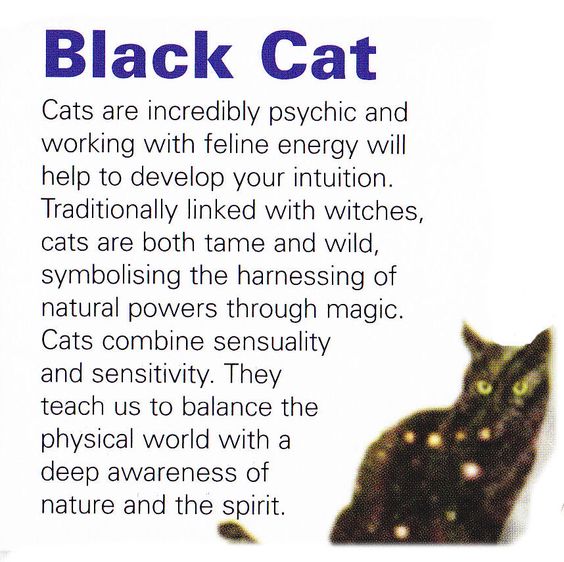
The Magick of the Black Cat

Your Animal Spirit Guide for June 24 is The Cat
Your Ancient Symbol Card for June 24 is Wisdom
Your Ancient Symbol Card for Today
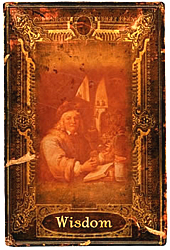
Wisdom
A very very few of us are fortunate to be born wise. For most of us our Wisdom evolves, grows as we move through life gathering experience and knowledge. Wisdom denotes your thoughts and feelings derived from the melding of your life experiences with all that you have learned. Our Wisdom can get us through the difficult moments in our lives as well as provide the mental and spiritual tools we need to succeed.
As a daily card, Wisdom indicates a time when you should rely heavily on past experiences and knowledge attained to make important decisions in your life. This is a time where reflection and planning should guide your actions. To act rashly, on impulse at this time may well cost you in the future. Go slow, think things out, weigh all of your options carefully and then proceed.
Your Influences for the Week of June 25
Your Influences for the Week Ahead
Tarot Influence

Two of Wands Reversed
New ventures may prove unfruitful. Adversity may be experienced in all or any arena of life.
Astrological Influence
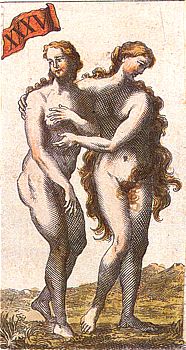
Gemini Reversed
Gemini reversed denotes vacillation. Decisions are not made, because all side of the issue pull with the same strength.
Element Influence

Earth Reversed
Earth reversed denotes a lack of positive connection with the life spirit–a lost soul. If you are not careful you may miss much of what life has to offer you.
Your Crowley Thoth Tarot Card for June 24 is Fortune
Your Crowley Thoth Tarot Card for Today
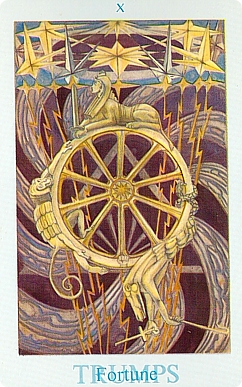
Fortune
Fortune represents that aspect of life that is directed by forces and events we may not understand or even be aware of. In short, Fortune deals with chance—those occurrences that manage to alter even the most structured of lives, usurp man’s “best laid plans.” While the effects of Fortune are unpredictable, the outcome is always change; sometimes for the better, sometimes for the worse. Our path through life is never a ride down a perfectly straight highway. Sometimes we may even experience hairpin turns or complete reversals of direction. Fortune is strong reminder that despite our plans, the Universe has its own agenda from which we cannot escape participation
Tarot Card for June 24 is The Devil
Tarot Card of the Day
The Devil
_____________________________________________
June 24, 2018

What has traditionally been known as the Devil card expresses the realm of the Taboo, the culturally rejected wildness and undigested shadow side that each of us carries in our subconscious. This shadow is actually at the core of our being, which we cannot get rid of and will never succeed in taming. From its earliest versions, which portrayed a vampire-demon, this card evoked the Church-fueled fear that a person could “lose their soul” to wild and passionate forces.
The image which emerged in the mid-1700’s gives us a more sophisticated rendition — that of the “scapegoated Goddess,” whose esoteric name is Baphomet. Volcanic reserves of passion and primal desire empower her efforts to overcome the pressure of stereotyped roles and experience true freedom of soul. Tavaglione’s highly evolved image (Stella deck) portrays the magical formula for harnessing and transmuting primal and obsessive emotions into transformative energies. As a part of the Gnostic message of Tarot, this fearsome passion and power must be reintegrated into the personality, to fuel the soul’s passage from mortal to immortal.
@Tarot.com is A Daily Insight Group Site
Born on a Sunday


You must be logged in to post a comment.